Ten years of Arm and micro:bit: Building the next generation of technology innovators
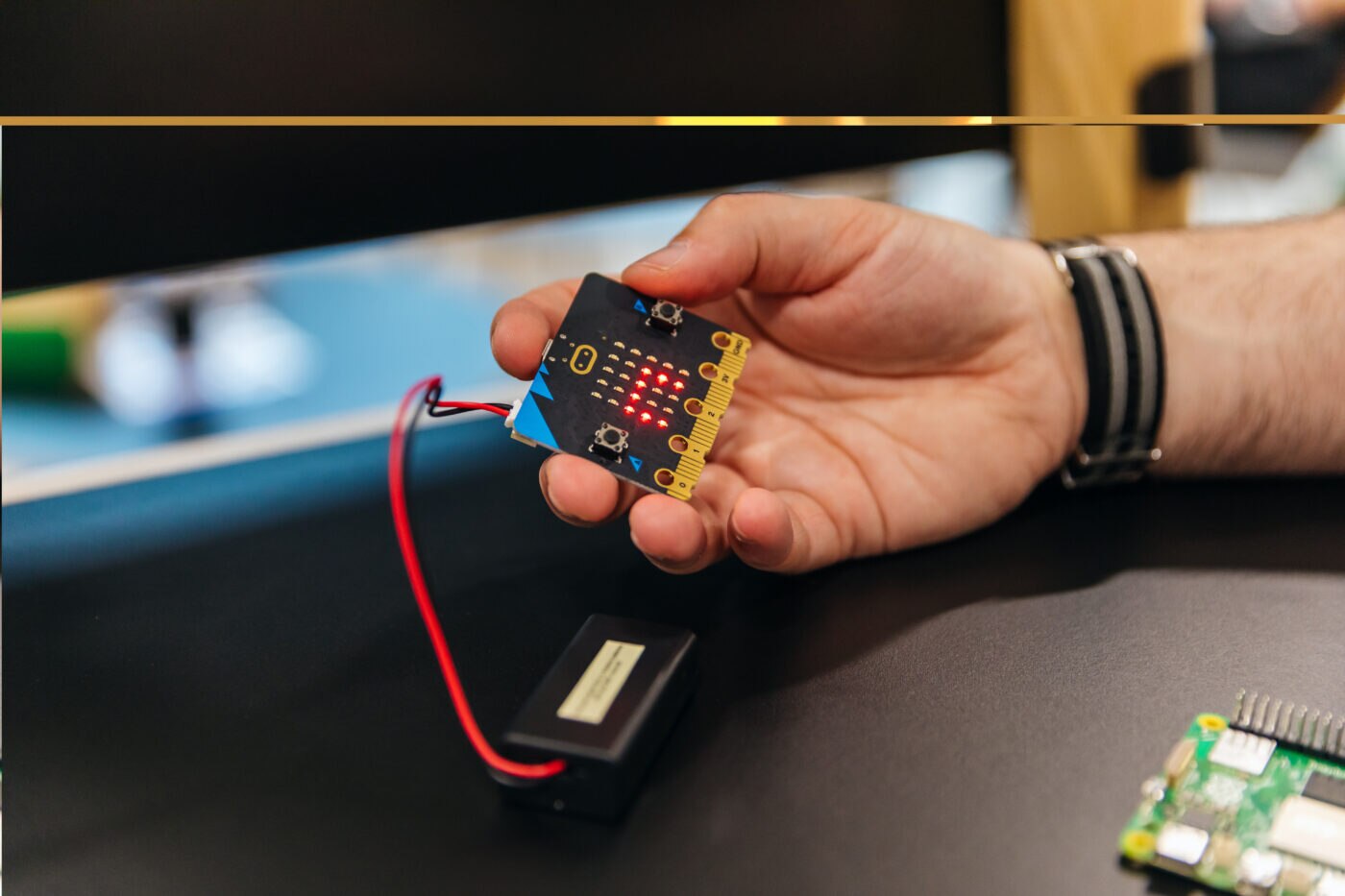
Ten years ago, a small programmable computer began arriving in schools across the UK. Its ambition was anything but small: to help a new generation discover that technology was not simply something to consume — it was something they could understand and create.
A decade later, that idea has become even more important. As AI reshapes how we live, learn, and work, young people need the skills and confidence not only to use technology, but to understand it, question it, and build with it. That principle has been at the heart of Arm’s relationship with micro:bit from the beginning.
The BBC micro:bit was developed through a unique, cross-industry collaboration involving the BBC, Arm, and other technology and education partners, including Nordic Semiconductor, NXP, Microsoft, and Samsung. Beginning in early 2016, one million devices were distributed to 11- and 12-year-olds, libraries, and non-formal education settings across the UK. Later that year, Arm helped establish the nonprofit Micro:bit Educational Foundation to take that opportunity to children around the world.
Today, an estimated 12 million micro:bit devices have been distributed. Approximately 73.5 million students across more than 85 countries have learned with the device, according to the Micro:bit Educational Foundation.
Those numbers represent millions of first steps: a first line of code, a first working prototype, or the first moment a young person realizes, “I can make this.” The opportunity is to take that same spirit into the AI era, helping the next generation become not simply consumers of increasingly powerful technology, but informed and confident creators of what comes next.
The milestone also reflects the role Arm has long played: building global ecosystems that enable innovation and create impact — from the classroom to the compute shaping tomorrow.
“I have no doubt that micro:bit has had an impact on STEM learning with young people over the last ten years,” said Rob Moran, Director of Engineering, Developer Environments at Arm. “It has reinvigorated excitement in that space. I would like to think that it means more people are interested in engineering in general and choose that as a career.”
From an idea to a global learning platform
The micro:bit was designed to make computing physical, creative, and approachable. Its programmable buttons, LED display, sensors, and connectivity allow learners to turn code into something they can see, hold, and explore — from a step counter or digital compass to a scientific data logger or environmental-monitoring project.
The Arm compute platform was part of that experience from the beginning. The original device incorporated Arm Cortex-M processors alongside software development tools and compiler services that helped make it straightforward for students to move their programs from a screen onto the device. Together with the BBC, technology partners, teachers, and researchers, Arm helped turn an ambitious idea into a platform capable of reaching learners at scale.
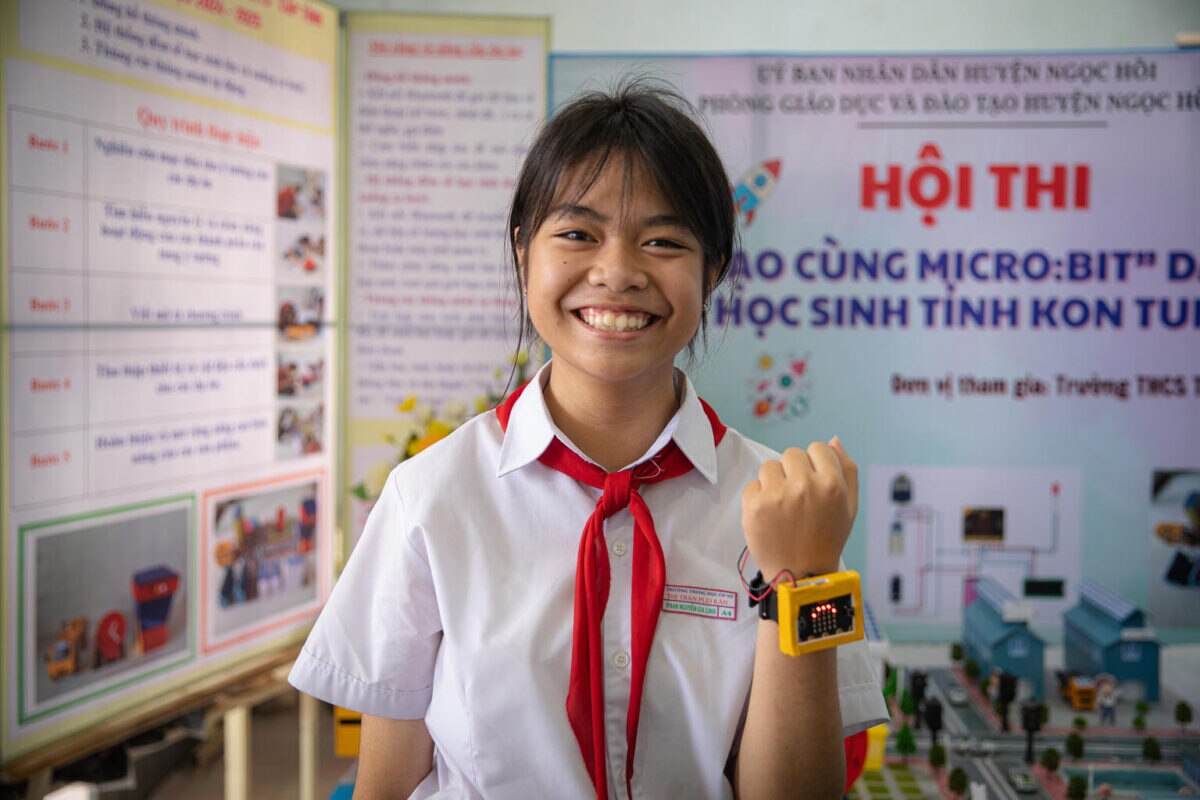
When the first devices began arriving in schools in March 2016, the aim was to inspire the kind of curiosity that the BBC Micro had sparked in an earlier generation.
“I saw firsthand at Arm how much ambition went into the original BBC micro:bit, and how that ambition built a passionate and amazing partnership with a common belief,” said Jonny Austin, Chief Technology and Product Officer at the Micro:bit Educational Foundation. “We believed that an approachable device could give young people a completely different relationship with technology; inspire a diverse range of people to have the confidence to get creative with it. Ten years on, seeing that idea reach millions around the world is incredibly powerful.”
Making access to digital skills more equitable
Technology has changed dramatically since the micro:bit device launch. Digital skills are no longer valuable only to those considering a career in computing; they increasingly affect how people learn, work, and participate in society.
Yet access to technology education remains unequal. Many young people — particularly girls, children with disabilities, and learners in underserved communities — continue to face barriers to developing the skills and confidence to participate fully in the digital world.
The micro:bit helps lower those barriers by making computing tangible and approachable. Learners can begin with block-based coding before progressing to text-based programming, while educators can access free classroom materials, professional development courses, and online tools.
“Closing that gap is about more than digital skill,” said Fran Baker, Director of Sustainability and Social Impact at Arm. “It is about ensuring that technological progress creates opportunity more broadly, rather than deepening existing inequalities.”
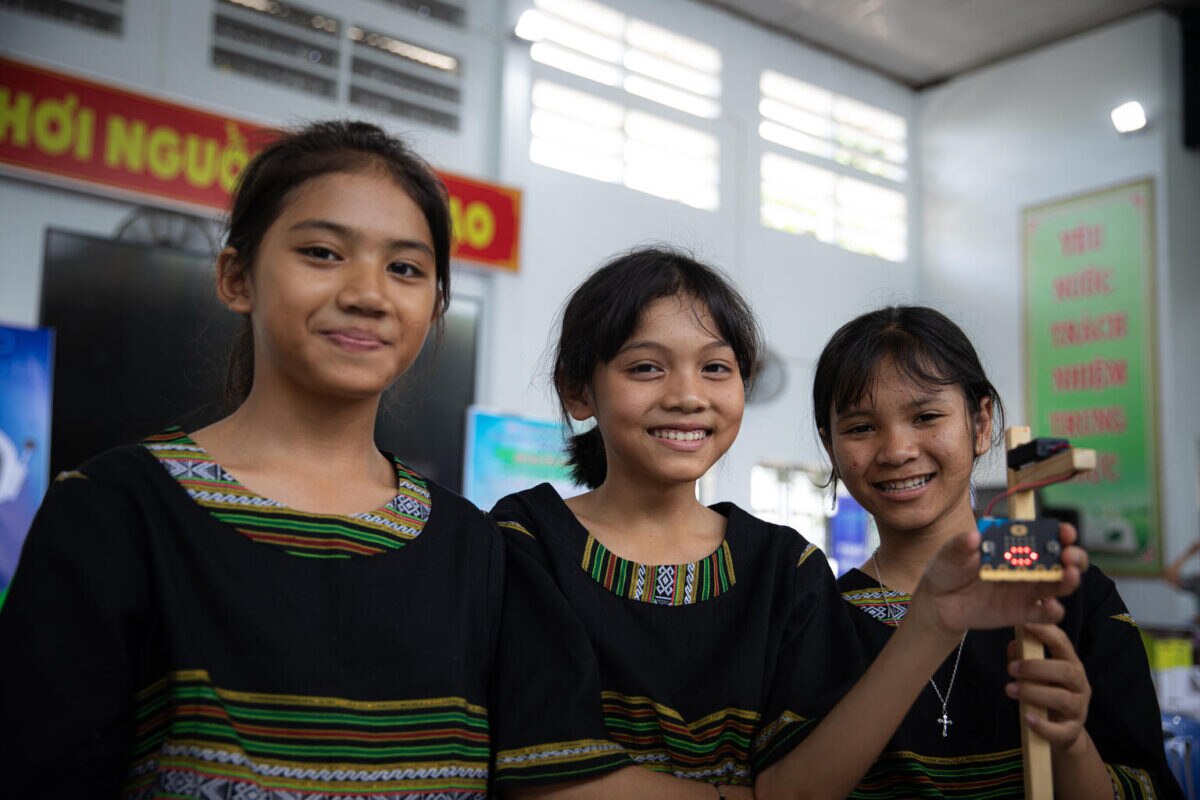
Independent research cited by the Micro:bit Educational Foundation also points to the value of this approach. In the first year of the UK program, 90% of those who used the BBC micro:bit said it helped show them that anyone can code, while 88% said it made coding seem less difficult than they had expected.
This is why Arm’s support extends beyond technology. Through strategic ecosystem collaborations and investment in inclusive digital learning, Arm works with partners to help more learners benefit from computing.
“The Foundation’s partnerships are critical to our success,” said Gareth Stockdale, CEO at Micro:bit Educational Foundation. “Our partnership with Arm has enabled us to deliver high-impact educational programs around the world that have shifted the needs in terms of tacking the digital skills gap.”
Preparing for an AI-powered world
The next chapter of digital education must include AI literacy.
As AI becomes part of everyday life, young people need more than the ability to use AI-powered products. They need opportunities to understand how these systems work, think critically about their impact, and use technology to solve problems themselves.
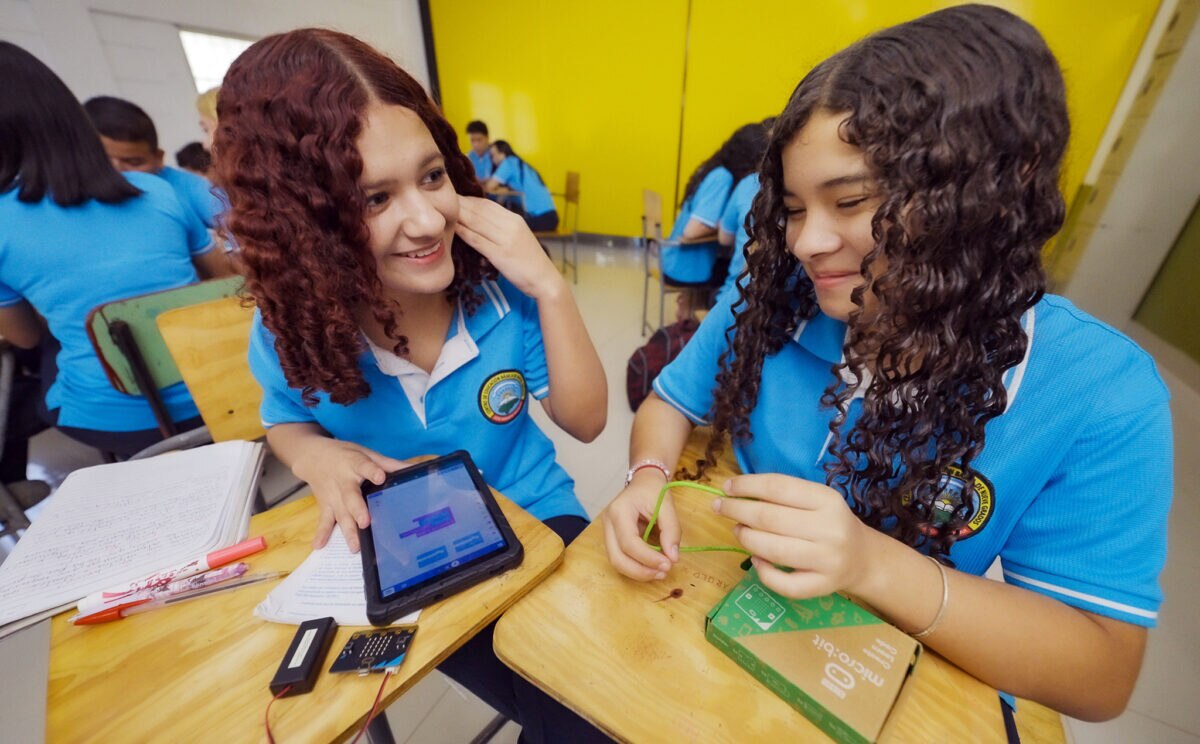
That focus is taking shape through UNICEF’s Tinkering with Tech and AI initiative as part of Arm’s decade-long partnership with UNICEF. Delivered in collaboration with the Micro:bit Educational Foundation and Raspberry Pi Foundation as an implementing partner, with Arm as a key strategic partner, the program combines design thinking approaches with physical computing tools, including the BBC micro:bit. The initiative helps students, especially girls and teachers, build practical digital and AI skills.
Following pilots in Honduras, Maldives, Montenegro, and Vietnam, UNICEF announced in 2026 that Tinkering with Tech and AI would expand to additional countries with a stronger focus on AI literacy and adaptable learning resources that help young people use technology to address challenges in their communities.
“Young people are growing up in a world where technology and AI will increasingly shape how we live, learn, and work,” said Fran. “Not every child needs to become an engineer, but every child, wherever they are in the world, should have the opportunity to understand these technologies, build with them, and have a voice in shaping how they are used.”
The power of an ecosystem
The story of micro:bit sits in a lineage of British computing innovation. The BBC Micro introduced a generation to programming in the 1980s. Members of the Acorn team behind it went on to establish Arm, whose technology now touches 100% of the connected global population. Decades later, micro:bit carried that spirit forward for a new generation.
Today, the scale has changed, but the underlying idea remains powerful: give young people accessible tools, support their teachers, and trust their creativity.
“At the heart of it all is a shared belief in giving young people the confidence to experiment with technology, understand how it works, and imagine what they might create with it,” said Charlotte Eaton, Chief People Officer at Arm. “Ten years on, that belief matters more than ever. As AI rapidly changes what’s possible, curiosity, confidence, and the ability to keep learning will empower the next generation not just to use technology, but to build what comes next.”
A decade after the Micro:bit Educational Foundation was established, a UK education initiative has now become a global community spanning schools, governments, nonprofits, researchers, and technology companies.
“I’m incredibly proud of what we’ve achieved together, and of Arm’s continued commitment to helping every child create their best digital future,” said Charlotte.
The future will bring new technologies and new questions, but Arm’s commitment remains constant: to help expand access to the knowledge and tools that will make future innovation a reality. Because the next generation should not only experience the future of technology — they should have the opportunity to build it.

Any re-use permitted for informational and non-commercial or personal use only.
Editorial Contact
Stay informed with Arm's top stories, insights, and conversations.


Latest on X

Headed to the #OCPGlobalSummit2026 next week? Make sure you have @awadmo 's keynote on your schedule!
As Agentic AI is changes the unit of scale in the data center - he'll explore why scaling this shift depends on open, interoperable infrastructure built for performance and

Meet @amazon's first-ever lineup of Alexa tablets! 📱
Built on Arm, the flagship 12 Pro features the @MediaTek Dimensity 8400 with Arm Cortex-A725 CPUs and Mali-G720 graphics, delivering performance and power efficiency for everyday experiences.
https://x.com/i/article/2108180370860425216
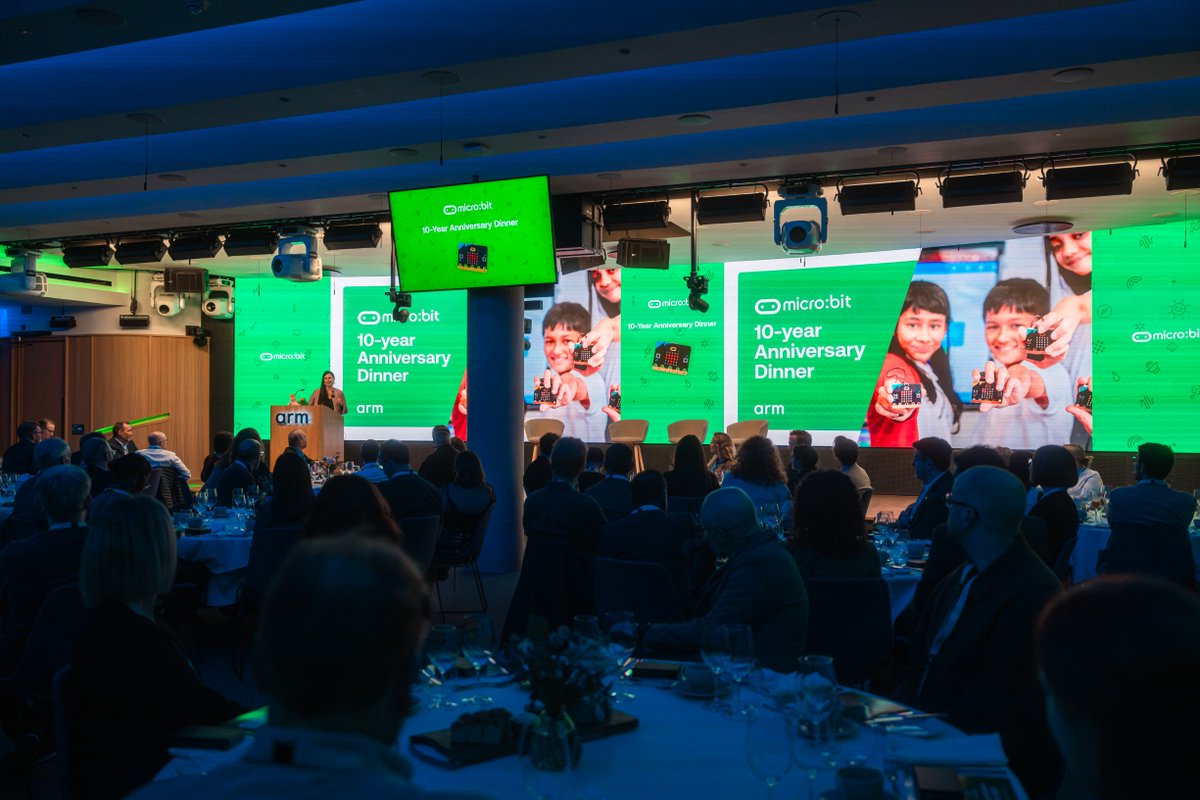
10 years of micro:bit! 🎉
From inspiring stories to hands-on demos and a little friendly duck-throwing competition, it was an evening full of fun!
We loved celebrating this milestone at our Cambridge office, alongside the micro:bit champions and partners who've helped make it



Moving a cloud-native app from x64 to Arm takes less than you might think. 👀
Multi-architecture containers make it possible to build for and deploy on Arm-based Microsoft @Azure Cobalt 200 with minimal changes.
Watch the demo to learn how!
https://okt.to/iLB29e

One compute platform. From the device in your hands to the cloud behind it. @ctbergey explores how Arm is enabling the future of hybrid intelligence. 👇

From cloud to PC: Arm is powering the next era of intelligent computing
We’re entering an exciting new chapter for Arm, not just in personal computing, but across the computing landscape...
okt.to
The next chapter of hybrid intelligence is taking shape on Arm.
Microsoft's new Surface PC featuring @NVIDIARTXSpark brings that vision one step closer, building on the same Arm compute platform that powers Azure Cobalt in the cloud.
It marks a new milestone for our
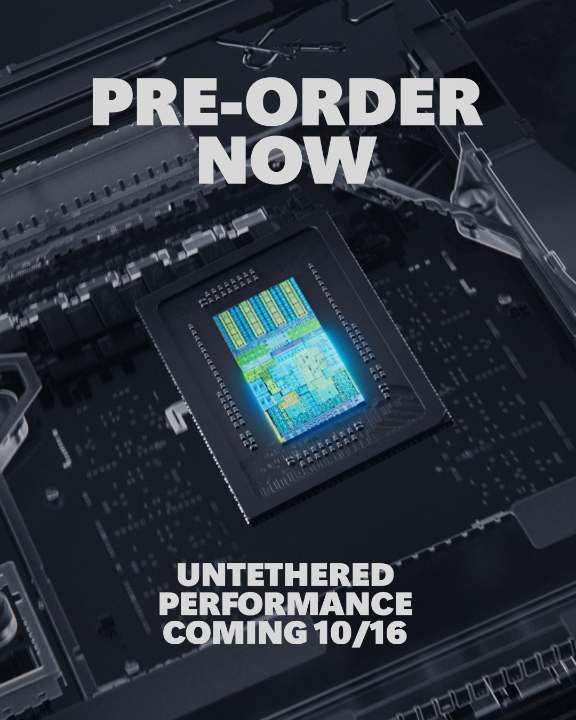
More power. More possibilities. More places to make it happen.
Meet the most advanced Windows laptops ever, powered by @NVIDIARTXSpark.
Available for pre-order now. https://msft.it/6018aol50
Video Credit: @BBC Tech Now
Technology restoring touch for amputees and those born without a limb today — and advancing what’s possible in robotics. 🦾
@paulcarterTV, @DOUBLExA and Arm’s @drewhenry explored the @PSYONICinc Ability Hand at our Cambridge office – and the