What Arm-based innovations happened in May 2026?

This month’s “Beyond the Newsroom” highlights the latest Arm ecosystem momentum across cloud, edge, developer tooling and real-world AI deployments. From agentic AI infrastructure and workload profiling to on-device generative AI, computer vision, secure digital identity and accessibility at the edge, these stories show how Arm-based technologies help move intelligent computing into practical, scalable systems.
Profiling AI and cloud workloads with Arm Performix
As AI and cloud workloads grow more complex, developers need clearer ways to understand where performance is gained or lost. Discover how to profile, tune and validate workloads on Arm-based infrastructure — from using flame graphs, microarchitecture analysis and SIMD optimization on a dot product workload to learning how Arm Performix helps developers profile and optimize RAG pipelines on Arm Neoverse platforms, including Google Cloud’s Arm-based N4 instances. These examples show why repeatable, silicon-aware performance analysis is becoming more important as AI workloads scale across cloud environments.
Building the foundation for agentic AI on Arm
Agentic AI is placing new demands on cloud infrastructure as autonomous systems coordinate models, tools, memory and workflows in real time. In one Arm Community blog, Satadal Bhattacharjee, Global Head of Cloud and AI Infrastructure Silicon, explores how Arm AGI CPU can support this emerging orchestration layer with high core density, memory bandwidth and deterministic performance. A second blog from Yan Fisher, Director, Software Ecosystem, shows how Arm, Canonical and Google Cloud are extending full-stack support through Ubuntu, Google Cloud C4A metal, Arm AGI CPU enablement and Arm Performix.
These show how CPU-led orchestration and ecosystem collaboration can help developers profile, optimize and scale the next generation of agentic AI workloads on Arm.
How Arm and Google are advancing on-device generative AI
On-device generative AI is moving quickly from text to richer multimodal experiences, including audio generation, but developers still need practical ways to reduce latency and memory use on edge devices. In this Arm Community blog, Gian Marco Iodice, Principal Engineer, explains how Arm and Google are making this more achievable by integrating Arm Scalable Matrix Extension 2 (SME2) and Arm KleidiAI into Google AI Edge and LiteRT, enabling faster, lower-memory CPU inference for audio models without sacrificing quality. With results including more than 2x faster audio generation and roughly 4x lower DiT submodel memory usage, the work shows how optimized CPU inference can help developers move from PyTorch to deployment more efficiently.
Arm Create brings cloud-to-edge AI development into one place
Arm Create is a new developer experience that brings community programs, hands-on challenges, tools and practical developer kits into one place for building on Arm. In this Arm Community blog, Joe Alderson, Director, Developer Platform Strategy, explains how Arm Create, the Arm Developer Program and new kits help developers learn faster, access reusable workflows and move AI workloads from prototype to production across cloud, edge and physical AI systems. As AI development becomes more distributed, this unified experience gives developers a clearer path to experiment, optimize and build confidently on Arm.
How Arm Neoverse is expanding choice for high-performance LLM inference
SGLang is a high-throughput LLM serving engine used to improve inference efficiency for large language models, with features such as KV-cache reuse, continuous batching and speculative decoding. In this Arm Community blog, Yibo Cai, Principal Software Engineer, shares why Arm is bringing SGLang’s high-performance LLM inference stack to Arm Neoverse, including W8A8 quantization for dense and MoE models, Arm64 CI and optimizations that help make production-ready LLM serving more efficient on Arm-based infrastructure. The work gives developers more choice for memory-bound AI inference workloads as deployment scales across cloud and data center environments.
Computer vision acceleration expands on Arm CPUs with KleidiCV 26.03
Optimized computer vision support is expanding on Arm CPUs with KleidiCV 26.03, helping developers accelerate more OpenCV image-processing and optical-flow workloads with minimal application changes. In this Arm Community blog, Mawussi Zounon, Staff Software Engineer, explains how the latest release adds broader algorithm coverage, clearer backend control and new support for macOS and Windows 11 on Arm. With benchmarked speedups of up to 14x versus OpenCV alone on selected routines, the update gives developers a more flexible path to high-performance computer vision across Arm-based environments.
AI accelerates Python package support on Windows on Arm
As Python support on Windows on Arm continues to expand, one key challenge remains: many packages still lack native win_arm64 wheels, creating extra work for developers who need reliable performance on Arm-based devices. In this Arm Community blog, Michael Gamble, Senior Partner Marketing Manager, explains how Arm is using Codex and an AI-assisted Windows on Arm porting agent to make Python wheel migration more repeatable, measurable and easier to scale. By combining hosted Windows on Arm CI, real-device validation and agentic workflows, the approach helps reduce repetitive porting effort and gives maintainers a clearer path from “it builds” to “it works.” It is a practical example of how AI-assisted development can help strengthen the Windows on Arm software ecosystem.
Real-time sign language translation comes to the edge with Arm Ethos-U
Accessibility tools are becoming more practical at the edge, where low-latency AI can run close to the people who need it. In this Arm Community blog, Fidel Makatia, Ph.D., Texas A&M University Distinguished Arm Ambassador, shows how Arm Ethos-U65 NPU can power real-time, offline ASL-to-text translation on embedded devices.
The project recognizes 29 ASL alphabet characters with approximately 3.5ms NPU inference, keeping video processing private and on-device while avoiding the latency, connectivity and data security challenges of cloud-based systems. It shows how efficient edge AI can make assistive technology more responsive, accessible and deployable in everyday environments.
EDA workloads meet the Arm data center ecosystem
As AI raises the complexity of chip design, the infrastructure behind EDA workloads is becoming just as important as the silicon being designed. At CadenceLIVE, Cadence CEO Anirudh Devgan highlighted how Arm-based data center platforms, from AWS Graviton to systems from NVIDIA, Microsoft, Google and others, are giving engineering teams more choice, efficiency and cloud flexibility for compute-intensive design workflows.
The conversation reflects a broader shift: Arm is increasingly part of the foundation for the next generation of AI-driven engineering and data center innovation.
Arm and Eclipse CDT Cloud advance open-source debugging for Cortex-M developers
Open-source collaboration is helping make embedded debugging in VS Code more consistent, extensible and easier to integrate across the developer ecosystem. In this Arm Community blog, Christopher Seidl, Director of Product Management, explains how Arm and Eclipse CDT Cloud are improving embedded debugging through reusable open-source components that support Cortex-M debugging, memory inspection and peripheral visibility. By contributing to shared infrastructure, Arm is helping reduce fragmentation across embedded workflows and giving developers a more consistent foundation for building and debugging Arm-based systems at scale.

Any re-use permitted for informational and non-commercial or personal use only.
Editorial Contact
Stay informed with Arm's top stories, insights, and conversations.


Latest on X

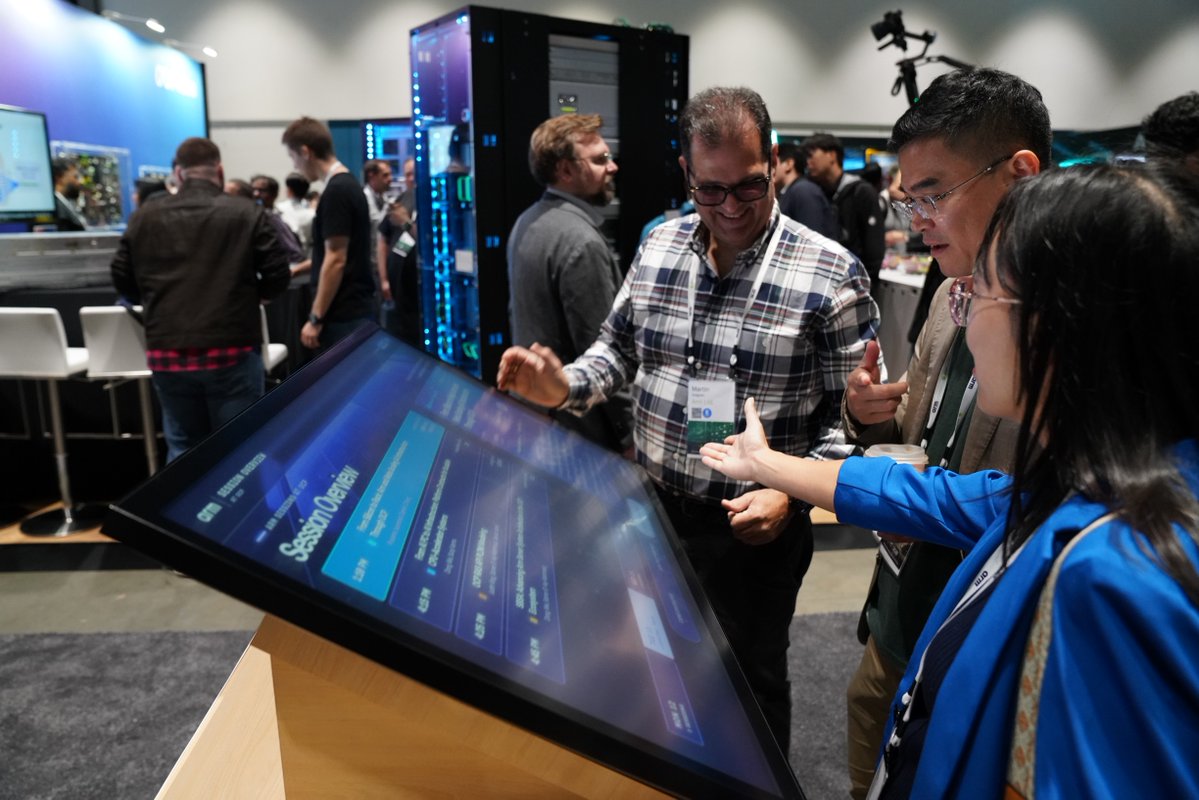
Goodbye to the #OCPGlobalSummit2026 👋
One thing was clear throughout the week: building infrastructure for the agentic AI era requires innovation across the entire system, from silicon to rack.
It was great to see the OCP community come together to advance this vision, with



Different companies. Different terminology. One increasingly complex robotics ecosystem.
A Robotics Capability Framework creates a shared language to help reduce fragmentation, simplify integration and accelerate adoption.
Hear from @AnaxiLabs, @McKinsey and @Lenovo on why

From first lines of code to millions of young creators! 💻
From Arm technology in the original device to collaborations with @UNICEFinnovate supporting digital and AI skills, swipe through to see what our partnership with micro:bit has made possible. 👇https://okt.to/nW3fp5
Arm CEO @Renehaas237 sat down with Jodi Shelton on the @ABitPersonalPod to discuss his career journey, leadership lessons, and the role Arm is playing in today's evolving technology landscape.
🎧👀: https://okt.to/8pgABa

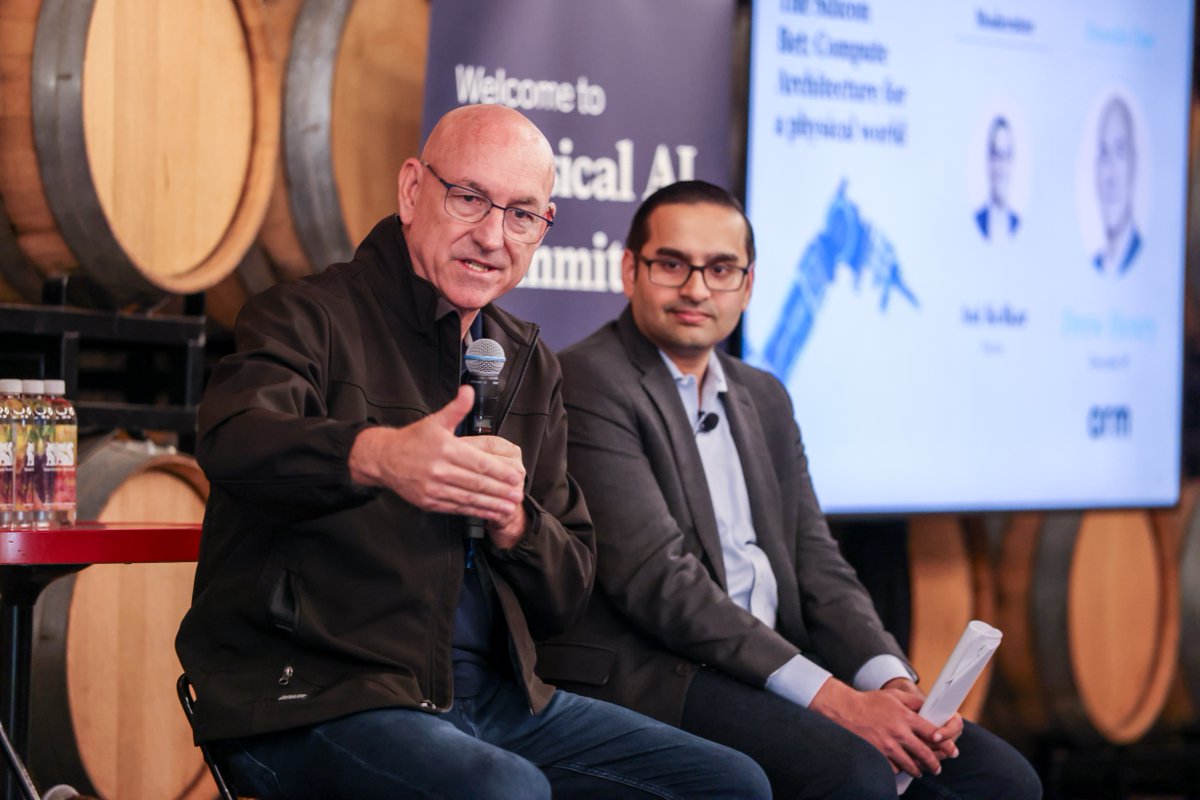
At the @McKinsey's Physical AI Summit, @drewhenry discussed the compute challenges of scaling physical AI.
From real-time performance to safety and efficiency, he shared how Arm's flexible compute platform supports the next generation of intelligent systems.
Great discussion



✅ @Supermicro 10U 4-node liquid cooled rack
✅ Arm AGI CPU @OpenComputePrj reference server
✅ Hands-on demonstrations
✅ Access to Arm experts
The show's not over yet - make sure to swing by booth C72 at the #OCPGlobalSummit2026 for a closer look at how we're building for the


Performance. Scale. Efficiency.
With 2x performance per rack -the Arm AGI CPU delivers. 💪

Enterprises scaling agentic AI can get about twice the CPU work out of the same rack power with the @Arm AGI CPU, based on @Signal_65 modeled rack analysis.
Full report: https://signal65.com/research/ai/arm-agi-cpu-performance-rack-scale/
That matters because power and floor space now cap how far AI infrastructure can