Texas and Arm: Building a full-stack AI and semiconductor ecosystem

If you want to imagine the future of public-private technology partnerships, just picture it wearing a big Stetson hat and cowboy boots.
Texas is moving quickly to shape the future of artificial intelligence (AI) and semiconductor innovation in the United States. Across the state, public investment, private capital and world-class higher education institutions are converging around a shared goal: strengthening domestic semiconductor capability and building the workforce that will power it for decades to come.
For Arm, Texas represents a proof point – a place where long-term investment in research, technology, infrastructure and education can come together under a coordinated vision. Through partnerships with leading universities and technical colleges and collaboration with state leaders under the Texas Semiconductor Innovation Fund (TSIF), Arm is helping to demonstrate how a modern public-private partnership can translate semiconductor ambition into measurable workforce and economic outcomes.
That collaboration is already tangible: earlier this year, Arm welcomed a bipartisan delegation of Texas state legislators to Cambridge, our global headquarters, for working sessions on semiconductor competitiveness and AI workforce development. The gathering deepened alignment between state investment priorities and talent pipelines needed to drive them.
Texas and the next chapter of U.S. semiconductor leadership
Both Arm and Texas officials treat workforce development as strategic infrastructure. By co-designing programs with educators and aligning them to real-world architectures and AI workloads, Arm and its partners are ensuring that semiconductor growth is supported by an adaptable and knowledgeable talent base.
Texas at a glance
- $71 million Arm capital investment in Austin
- $4.16 million Texas Semiconductor Innovation Fund grant
- 320+ new skilled jobs expected
- University partnerships spanning research, internships and workforce development
- Part of a broader statewide one-Texas semiconductor ecosystem strategy
In 2023, Gov. Greg Abbott signed the Texas CHIPS Act, establishing the TSIF and appropriating nearly $700 million to support semiconductor research, design, manufacturing and workforce development. The goal was to ensure Texas plays a leading role in the resurgence of U.S. semiconductor competitiveness.
The alignment between policy, industry and education is what makes Texas distinctive and what makes it an ideal environment for Arm’s long-term strategy.
Expanding advanced chip design in Austin
Arm’s presence in Texas is anchored in Austin, and February 2026, Gov. Abbott announced a $4.1 million TSIF grant to support Arm’s Austin campus expansion. Arm’s $71 million capital investment in the campus includes the addition of a new semiconductor lab with advanced failure-analysis capabilities. The expansion is expected to create more than 320 new skilled jobs in the region, further strengthening Austin’s position as a hub for AI-driven chip design and advanced compute innovation.
“Texas is where the world innovates,” Gov. Abbott said. “This $71 million expansion of Arm’s engineering and innovation hub in Austin will create hundreds of skilled jobs and enhance Texas’ leadership in semiconductor design and manufacturing. Partnering with industry leaders, Texas is investing in the tech advances of tomorrow – today.”

My colleague, Vince Jesaitis, head of global government affairs, puts it well:
“TSIF recognizes that semiconductor leadership depends on both infrastructure and people. Our Austin expansion strengthens U.S. chip design capability while creating hundreds of high-skilled jobs. We’re proud to be responsible stewards of state investment and to translate that support into long-term economic and workforce impact.”
Workforce as infrastructure: Building the talent engine
But capital investment alone cannot secure semiconductor competitiveness. The long-term differentiator is talent.
That is why Arm’s strategy in Texas places workforce development at the center, not as an add-on but as core infrastructure. That commitment also aligns with national priorities. In support of the White House’s Pledge to America’s Youth: Investing in AI Education, Arm launched the Educate AI Coalition, a nationwide initiative designed to close the AI literacy gap and empower students and educators to excel in AI education.
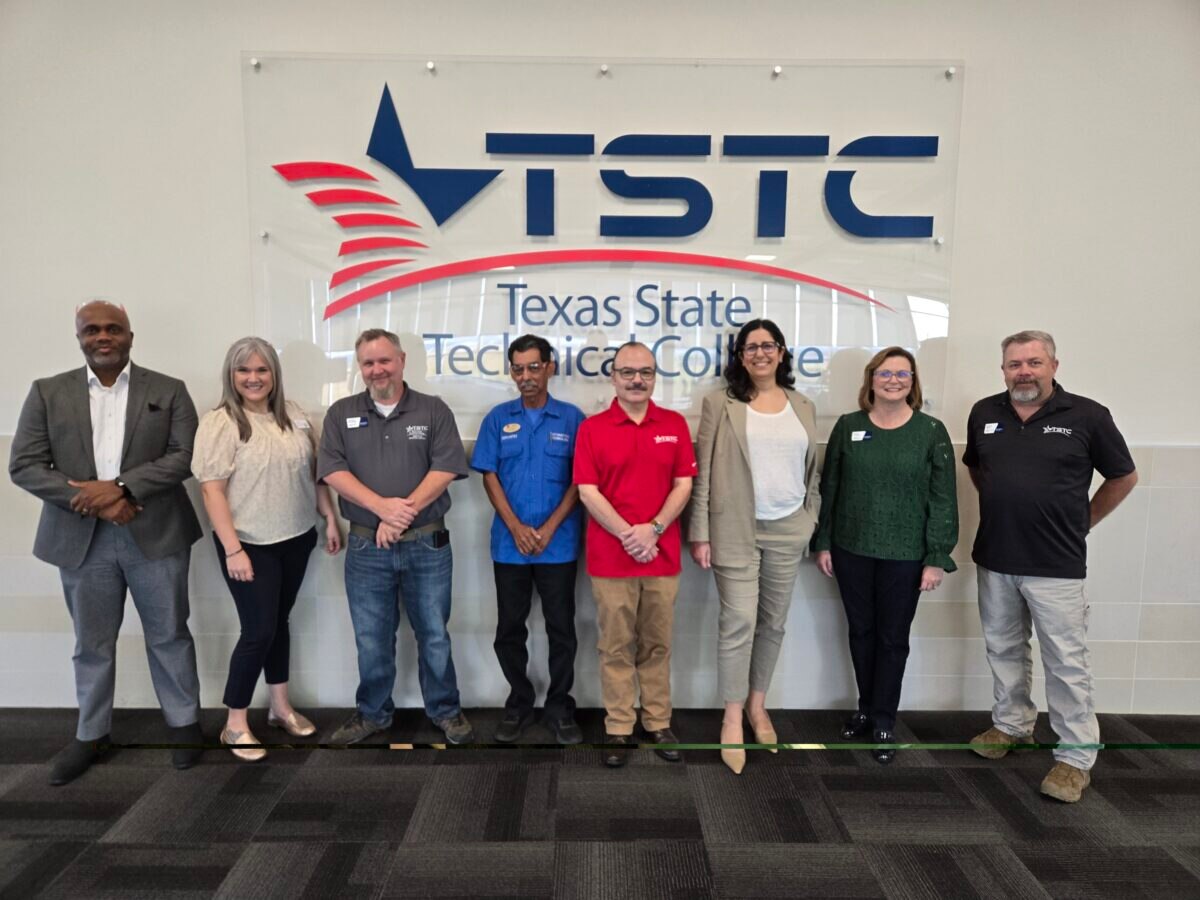
Beyond research universities, Texas’ workforce ecosystem includes technical colleges and accelerated training programs supported through TSIF and related initiatives. In partnership with Texas State Technical College (TSTC), Arm is helping expand hands-on workforce training aligned with the needs of the growing semiconductor and AI industries. By supporting curriculum development and applied learning programs, Arm and TSTC are creating pathways for students to move into high-demand technical roles that support chip design, testing, and compute infrastructure across the state.
Workforce development cannot be an afterthought to semiconductor investment. In Texas, we’re aligning curriculum with real-world semiconductor design needs, creating pathways from classroom to lab to full-time engineering roles. This is about building durable capability that strengthens both Texas and the broader U.S. ecosystem.
One Texas: A full-stack ecosystem
Arm’s Texas strategy requires a full-stack ecosystem, with policymakers, academic institutions and industry partners to co-create long-term outcomes. Texas demonstrates how federal investment in CHIPS and state-level partnership can translate into a complete ecosystem – from research labs to operational AI infrastructure – that delivers long-term economic resilience.
Rather than focusing narrowly on one city, the one-Texas approach recognizes the strength of a statewide network. Houston, Dallas-Fort Worth, Abilene and other regions play complementary roles in data center deployment, workforce programming and research collaboration.
“Economic competitiveness depends on talent; workforce investment is essential infrastructure.”
Arm’s role is to serve as connective tissue across that ecosystem: linking architecture expertise with applied research, aligning curriculum with real-world deployment and ensuring that workforce development keeps pace with technological advancement.
Texas’ momentum extends well beyond any single company. The state is now home to one of the most concentrated semiconductor and AI buildouts in the country, spanning advanced manufacturing, chip design, AI infrastructure and hyperscale cloud investment.
In early 2025, Texas was announced the Stargate Project. This $500 billion investment over the next four years will help secure American leadership in AI, create American jobs and bring economic benefits across the country. Arm, Microsoft, NVIDIA, Oracle, and OpenAI are key technology partners in this effort.
Looking ahead
The progress underway today is designed to deliver lasting impact, not only strengthening Texas’ semiconductor and AI leadership, but demonstrating how coordinated public-private investment can translate ambition into durable capability.
By expanding advanced chip design in Austin, partnering with universities and technical colleges across the state and working closely with policymakers through TSIF, Arm is helping to build a full-stack ecosystem that connects research, infrastructure and talent development.
As this model matures, Texas can serve as a blueprint for other regions seeking to align semiconductor investment with workforce strategy.

Any re-use permitted for informational and non-commercial or personal use only.
Editorial Contact
Stay informed with Arm's top stories, insights, and conversations.



Latest on X

The new era of Googlebooks is here with @MediaTek’s flagship processor, the MediaTek Dimensity CX C10 Max. 🎉
Built on Arm CPU and GPU technology, it brings performance, efficiency, and on-device agentic AI together to help power the future of compute.

Dimensity CX C10 Max | AI-First Googlebook SoCs | MediaTek
Discover MediaTek Dimensity CX C10 Max processor, built for AI-first PCs with 55 TOPS agentic AI, sustained all-big-core performance, and Wi-Fi 7.
okt.to
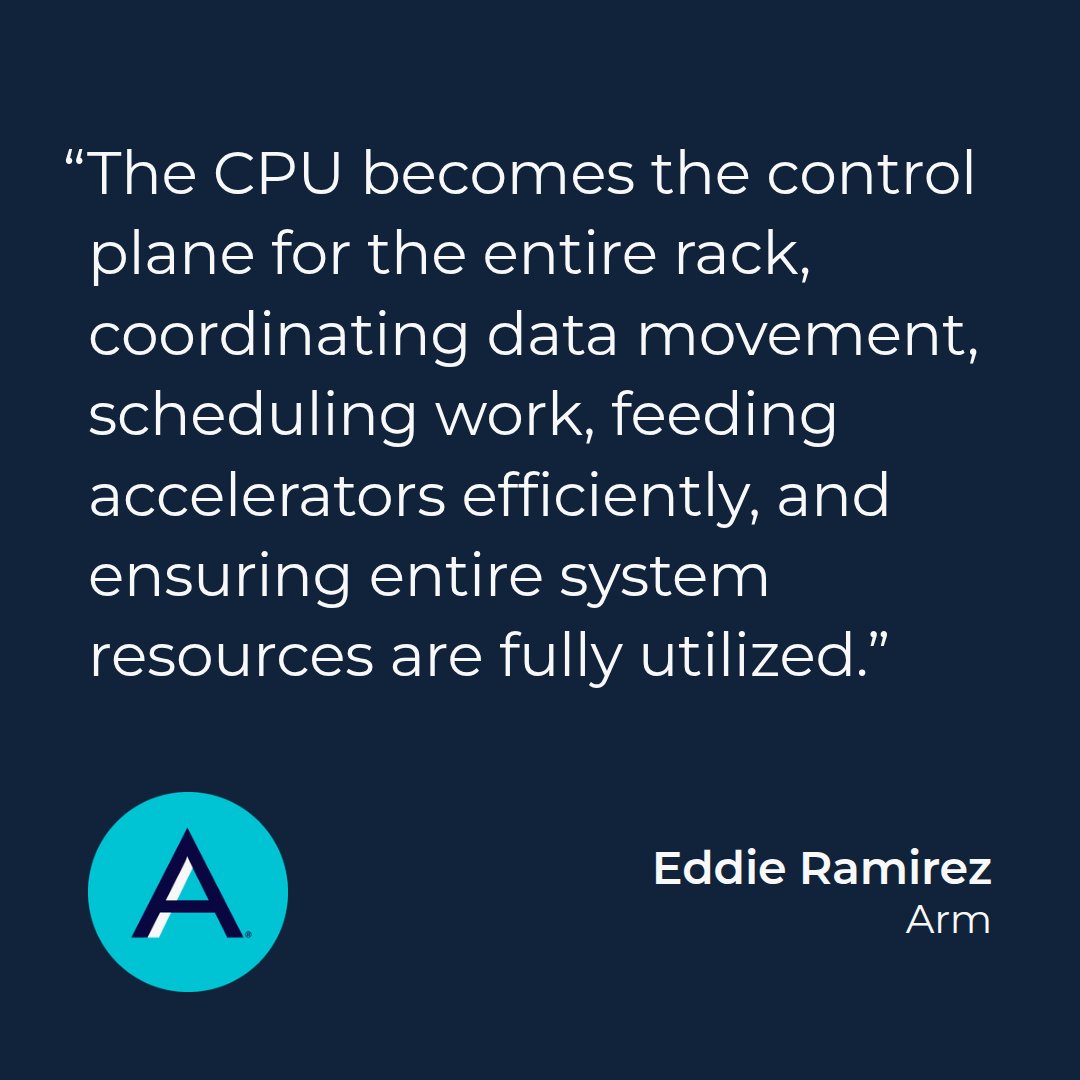
AI infrastructure is increasingly about optimizing the entire system, not just individual chips.
In TechArena's new report, Eddie Ramirez, VP of Marketing, Cloud AI at Arm, shares how power constraints and rack-scale computing are reshaping AI infrastructure. ⚡️
Check out the
Europe is focused on accelerating the next generation of innovators and a strong semiconductor design base will play a critical role in building the compute foundation for that ambition.
We’re joining EU Chips Design Platform (EuroCDP) as its first commercial IP provider,

Smarter AI models are only part of the robotics challenge.
Robots in the real-world need many different capabilities to work together reliably, making robotics increasingly a systems challenge.
In his white paper, The missing science of robotic systems, Federico Pecora explores

Build. Test. Experiment.
You won't want to miss the Arm Create Builder Zone at @WeAreDevs World Congress North America.
⬇️⬇️⬇️
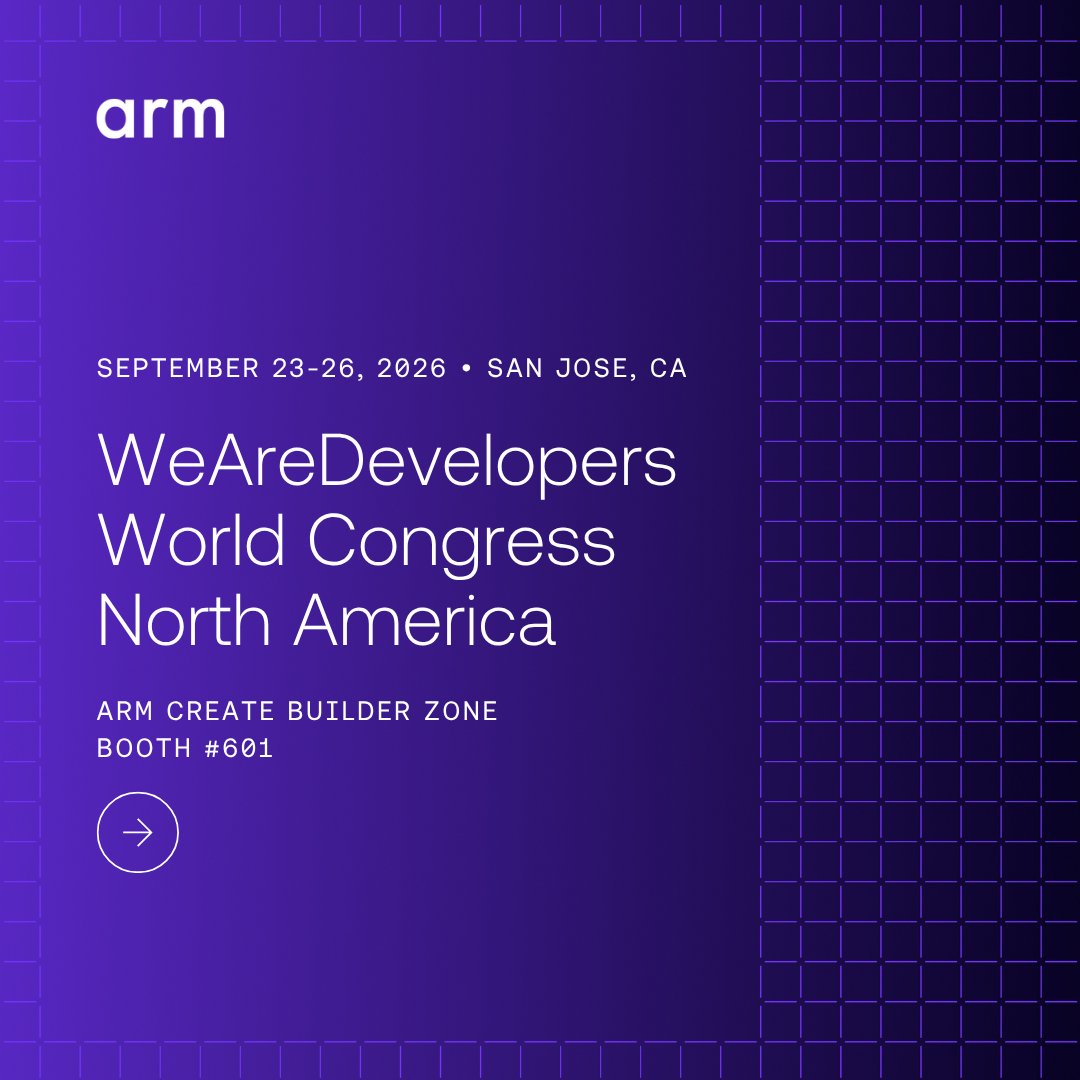
The Arm Create Builder Zone coming to @WeAreDevs World Congress North America!
🚀 Lightning talks
🚀 Demos
🚀 Conversations with the teams building the next era of AI
This is your chance to learn more about how YOU can build, test, and experiment on Arm.
Come and see us
What could AI make possible that we can’t imagine today?
Arm CEO Rene Haas talks to @BBC’s @faisalislam about the potential for AI to transform healthcare, including breakthroughs in diseases like cancer. https://okt.to/qHwKnr

Today’s @Snap SPECS launch offers an exciting look at that future—where immersive experiences can help people create, connect, and get things done while staying present in the moment.
As intelligence increasingly moves to the edge, experiences like these show what’s possible

SPECS bring useful digital experiences into the world around you while keeping you present in the moment. From work and navigation to entertainment, creativity, and connection.
https://SPECS.com