Arm Viewpoints: Aston Martin Formula One™ Team’s Charlie Blackwall on racing electronics (part 2)
Listen now on:


Summary
In this second of a two-part special series on the Arm Viewpoints podcast (click here for part 1), we explore how cutting-edge wind tunnel technology and virtual-first development workflows are transforming Formula One™ engineering, creating new possibilities for rapid innovation and aerodynamic advancement.
Host Brian Fuller, Editor in Chief at Arm, continues the fireside chat featuring:
- John Kourentis, Director of Automotive Go-to-Market, Arm
- Charlie Blackwall, Head of Electronics for the Aston Martin Aramco Formula One™ team
Together, they discuss:
Aston Martin Formula One™ Team’s revolutionary wind tunnel technology
- Why owning the world’s most advanced wind tunnel facility represents a competitive game-changer for championship aspirations
- The sophisticated technology inside a 40% scale Formula One™ model, from thousands of pressure tapping points to active suspension systems that can adjust ride height and pitch in real-time
- How Particle Image Velocimetry (PIV) systems use microscopic oil droplets and laser visualization to map airflow patterns around the car
- The critical speed advantage of having full control over testing schedules versus sharing facilities with competitor teams
Virtual-first development revolution
- How cloud-based development environments enable teams to prototype both machine learning models and hardware virtually before physical implementation
- The streamlined innovation process that reduces months-long research cycles to rapid collaborative development sessions
- Why virtual environments accelerate the crucial correlation between CFD models and wind tunnel data
Arm’s ecosystem advantage
- How Arm’s rich partner ecosystem provides access to cutting-edge technology solutions that are market-ready today, not future roadmap concepts
- The collaborative approach that allows cherry-picking the best innovations from across the entire ecosystem
- How this partnership model accelerates time-to-market for new Formula One™ technologies
Future innovations and regulatory navigation
- Driver assistance evolution: Understanding what’s allowed versus banned by FIA regulations—from automated clutch torque controllers to brake balance management
- Next-generation power systems: The transition to larger 10-megajoule batteries and 350-kilowatt motors for enhanced energy management
- Software-defined vehicle architecture: Moving toward more centralized compute platforms that enable rapid software updates and improved data correlation
Technical deep dives
- How bandwidth limitations during races restrict real-time telemetry but open opportunities for onboard AI processing
- The role of driver-in-the-loop simulators and circuit scanning technology for virtual car development
- Why the line between “driver assistance” and “automation” creates interesting gray areas for innovation within Formula One™ regulations
Looking ahead
- The excitement around 2026 regulation changes and new ECU systems
- How virtual development workflows will continue accelerating innovation cycles
- The partnership’s evolution from cautious electronics approaches to bold technological leaps
Plus, insights into the fascinating regulatory balancing act where drivers control torque demand and gear changes through automated systems, while safety features like collision avoidance remain strictly prohibited, and highlights Formula One™’s unique position as both highly automated and purely driver-controlled.
Whether you’re interested in aerodynamics engineering, cloud-based development workflows, or the intersection of regulatory constraints and technological innovation, this conversation reveals how modern Formula One™ teams are reimagining the entire product development lifecycle through virtual-first approaches and strategic technology partnerships.
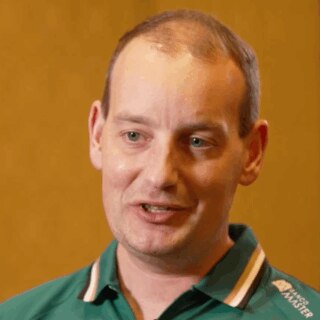
Charlie Blackwall, Head of Electronics, Aston Martin Aramco Formula One team
Charlie Blackwall is Head of Electronics at the Aston Martin Formula One™ Team, leading control systems, electronic design, and performance development across one of motorsport’s most technologically advanced operations. With over 18 years of experience in Formula 1, Charlie has worked trackside and in R&D roles spanning control systems, power unit calibration, and embedded software engineering. Before joining Aston Martin Formula One™ Team, he held key engineering positions at Mercedes AMG High Performance Powertrains and McLaren Racing. A graduate of Imperial College London in Mechanical Engineering, Charlie is passionate about high-performance systems, optimization, and pushing the boundaries of automotive innovation.

John Kourentis, Director, Automotive Go-to-market, Arm
John leads the EMEAI Automotive Go-To-Market team at Arm, driving vital ecosystem partnerships and steering strategies in ADAS, the evolution of the vehicle E/E architecture and virtual prototyping. With a background in the market development of embedded software and machine learning, he brings rich experience from senior roles at Canonical, Red Bend and Symbian before joining Arm in 2017. John is also Arm’s representative on the Autonomous Vehicle Compute Consortium’s (AVCC) Board of Directors.

Brian Fuller, Host
Brian Fuller is an experienced writer, journalist and communications/content marketing strategist specializing in both traditional publishing and evolving content-marketing technologies. He has held various leadership roles, currently as Editor-in-Chief at Arm and formerly at Cadence Design Systems, Inc. Prior to his content-marketing work inside corporations, he was a wire-service reporter and business editor before joining EE Times where he spent nearly 20 years in various roles, including editor-in-chief and publisher. He holds a B.A. in English from UCLA.
Note: If you missed the first of this two-part series, here’s the link).
Brian: [00:00:00] Hello and welcome to a special episode of the Arm Viewpoints Podcast. I’m Brian Fuller, editor and chief at Arm, and today we’re sharing the second of our two-part conversation involving Charlie Blackwall, head of electronics for the Aston Martin Aramco Formula One team and John Kourentis, Arm’s director of automotive go-to market.
It’s excerpted from a fireside chat to held in Cambridge this summer. In episode one, they discussed the partnership and the amazing technology that, pardon the pun, drives Formula One racing today. In this episode, they discuss Aston Martin’s new state-of-the-art wind tunnel and why owning it matters, how Arm’s ecosystem accelerates innovation.
Virtual first workflows to prototype models and hardware in the cloud for landing on the car and what the future holds for a sport that’s [00:01:00] increasingly embracing electronics and software. Let’s listen in to Park two. Another big
John: change recently has been the introduction of the wind tunnel.
Charlie: Yes. So previously we bought time from Mercedes to use their wind tunnel, but we know that to be, to win a world championship, we need our own.
So we’ve built this amazing new facility and it, as you said, it’s the most advanced wind tunnel in the world. It does everything. It’s really impressive. And, but the key to that is how do we use it? How do we. Get the data off it. How do we analyze all of that data and how do we best correlate it all as quickly as possible?
Yeah. Yeah, because we’re limited on how much we’re allowed to use the wind tunnel by the FIA (Fédération Internationale de l’Automobile )as well.
John: Yeah. But let’s dig into that in, in, in a bit more detail. So we’ve got, as I said on there, so we’ve got a 40% scale of the 6%. What’s inside that? So if you,
Charlie: from the, if you looked at it, it would just look like an F1 car.
Yeah. But 6%. But underneath it, it’s very different. So there’s obviously a, it’s effectively an industrial system. Yeah. But it’s all miniaturized. Everywhere on the car there’s pressure tapping. So we’re trying to [00:02:00]understand the flow around and the sort of the flow around the car because it’s trying to work up what the load is.
So you’ve got it’s fully active, so you’ve got active suspension. You can change the ride height, the pitch, the, your everything. And that’s all controlled. And what we’re trying to do is we’re trying to move the car in the airflow and see how the see how it reacts, see what the load change is.
But with that, as well as said, there’s pressure happenings all on the wings, on the floor or along the top. But then there’s also the PIV system, which I can’t remember how. Al velocity. Yeah. Inference or something like that. And that’s and what we do is we, you actually, you visualize the flow by firing tight, like microscopic oil droplets over it.
And then you fire lasers through it to then visualize what the flow of air is doing over the cart. And that is the real technology. That’s the really exciting bit. So those things combined give you all of your correlation to understand has this new front wing brought performance improvement or is it, is it doing what we expect, which is the main thing, it’s about correlation with the CFD (computational fluid dynamics) models.
John: and what difference does it make having your own facility [00:03:00] versus when you when you were sharing facility with Mercedes?
Charlie: It’s all about speed. Yeah, we can, we have full control of it. We have full control of how we operate the system, the interface between how the wind tunnel is controlled and how the model’s controlled and how we control all the data as well. So we have full control of it.
And the other thing is that we can react more quickly. Yeah. So with Mercedes, we had to use it when they weren’t using it. Whereas now we can do it when we need to do it, when we want to do it, and again, we develop all of the technology around it. Yeah. So it is just a, it’s just a massive step up.
John: I assume there’s no love loss there between teams as well, so they’re not doing any favors when they’re doing, they’ll win title time. Okay. And do you, so that’s largely looking at the development of the 2026 car, yeah. So I mean that wind tunnel
Charlie: time. When we commissioned the wind tunnel, obviously we, we did a back-to-back correlation with the existing one, and we were allowed to do that from the FIA to try and make sure that it was operating how we thought it was, so that will happen.
We’ve done a little bit of AMR 25 running. But it’s predominantly AMR [00:04:00] 26. It’s all focused on year.
John: So looking forward to big leaps forward next year and yeah, combination of a lot of hard work between the teams. If you had to sum up from the we are eight months since, since we announced the partnership.
We’ve been working together obviously for a bit longer than that. If you had to sum up the partnership with the Arm team for you and the team around you how would you do that in a sentence?
Charlie: It’s just, it’s exciting because it’s bringing in new ideas.
Yeah. It’s bringing in new ideas and it’s increasing the speed at which we can react. So the example of this is I want to bring in new technology at the moment. I would then say to one of my engineers, can you have a look at this? They do a load of research. Then they’d, a few months later go, I’ve got a framework of something I want to do.
Now we don’t do that. I can just speak to you. Yeah. And go, we’ll do it like this. Or here’s an idea, and then suddenly you streamline that process of introduction of new technology and also the new ideas as well. Here’s something, have you used this before? What’s that? This is
John: really
Charlie: cool.
John: And the interesting thing is, we’re taking, [00:05:00] we’re fortunate Army, we’ve got this rich ecosystem of all your partners around us.
And so we have visibility of a lot of the cutting-edge technology that, that’s in development or that’s just recently landed. And so we’re able to cherry pick a lot of the, the best the best ideas from everything that’s happening in the ecosystem. So actually.
Everyone in this room is contributing to the success of this partnership, right? We’re drawing on that expertise that’s being delivered from the whole ecosystem and guiding as Aston Martin as to where they should be looking, because you are looking for parts that are, on the market available date, right?
This isn’t future roadmap technology. This is all, the here and now of what’s available today. And that’s all comes from the richness of the ecosystem that we have around us. So everyone here is contributing to.
Charlie: Something that we discussed last time, which was again about streamlining and making, bringing things to the car quicker is about how we can do everything in a virtual environment.
Yeah. For instance, when we want to talk about putting our machine learning model on the car. Yeah. Not only can we develop all the model and run it, I. [00:06:00] Cloud. Yeah. We can also develop the hardware in the cloud and simulate all of that in cloud. So we can just go that’s all done. Now we can make it, send it onto to the car, and then it’s done.
And again, it streamlines that process and brings things to the car quickly. Yeah.
John: Just to wrap up, any thoughts on the future of the partnership?
Charlie: Oh, it’s exciting. I’m looking forward to, to getting, to taking us to the next step. In electronics, as I said before, we can be quite cautious.
Yeah. And not trying to take too many steps or not jump too far, but I think now we can and now we can bring these new ideas in and actually exploit where we can find ways to make the car go faster, get new data, could put instrumentation, but then also the sort of off car AI sort of style side of stuff as well.
John: Fantastic. So just to wrap up. What’s really interesting very different environments, right? Race, car environment versus passenger vehicles that we’re generally working in. But the trends are really similar. Actually. What you’re seeing is the exploitation of AI in race car, in their strategies, in their offboard systems.
And it’s very [00:07:00] similar to actually what we see happening. The transition that we see happening in passenger vehicles, right? Passenger vehicle platforms, move to moving to, single function ECUs to more consolidated compute platforms that are being defined by software now very quickly shift into how you can leverage AI as quickly as possible in those systems.
So very different environments, very different scale, but. Very similar trends that we see happening across, across, the F1 relationship that we’ve got with Aston Martin and what we see happening in the broader commercial industry as well. With that, Charlie, thank you very much.
I really appreciate you taking the time to, to come and share your thoughts and experiences with everyone here. We’ve got a few minutes for questions. Five minutes. Five minutes for questions. So if anyone has any questions, feel free, have one at the back there.
Questioner 1: Thank you for the great talk. I did have a question.
I imagine while the vehicles are running, there’s probably bandwidth limitations for like telemetry and various things like that. As it’s going around a track, moving to [00:08:00] more software defined vehicles, does that make it easier to actually make changes or evolve your plans where you don’t have to worry about connection, speed, and it’s just doing it its own.
Charlie: I think that in Formula One, we’re restricted on what we’re allowed to do. So the telemetry system is provided to us by Formula One management. We have to use it, and we’re not allowed to do anything outside of that at a race event. But in terms of. Off car. So in the wind tunnel in our test rigs and so on, we can do whatever we like.
So yeah, having more capable systems certainly improves that. And again, it’s about getting quicker, more data more quickly, and then being able to correlate it more quickly. So that link between, so CFD and wind tunnel is the key. Getting that the. The sort of getting the CFD models, getting that data, getting the wind tunnel model, getting that data, bringing it together and seeing where the differences are.
And doing that more quickly is going to bring parts to car more quickly.
John: And I guess having a more centralized compute, not having all the intelligence in the sensor necessarily, but having more [00:09:00] centralized compute allows you to do software on that compute platform without having to
Charlie: yeah, just take the data there and then actually centralize it and compare it in a central location.
Yeah. Thanks. Great question Angel.
Questioner 2: Thank you for the talk. I start to learn a lot more about Formula One now, especially the movie just came out. So one, one thing is that besides the improvement of car, do you see racetrack having sensors more so that you can really test the corners of the racetrack to improve your performance?
Like besides a car, do you see like other sites improving more intelligent adding more AI stuff in there?
Charlie: I don’t think so. The, a racetrack is just provided to us by whichever country has one. I think the sort of area which is more interesting on that is how we do driver and the loop simulators.
One of the sort of key development areas for us is obviously there’s a, we have a model of a, software model of it that we run. There’s a driver and loop simulator. What we do is we take, we scan circuits and [00:10:00]then we try and make a representation of those, and then we drive the car around it in a virtual environment.
That is an amazing tool that we use for car setup and car development, but that all hinges around understanding how the car works and understanding how, what the race tracker actually is. So there’s very small subtleties in like how rough the surface is, makes a big impact on the tire model and all that sort of thing.
That, that’s where we would look at that.
Questioner 3: Thanks. Great talk. Most of the driver assistance systems that most of the people in this room design are actually banned by the FIA. Yes. But many of them are allowed, and I’m thinking of clutch point detectors, engine management, break point balancing, that kind of thing.
Yeah. Can you speak to any innovation that’s happening for driver assistance in car systems? That is allowed by the FIA, so I think. It’s
Charlie: interesting how, where you draw the line on what a driver assistance system is. Obviously the car is effectively automated in terms of how it operates. So [00:11:00] the whole hybrid power unit is automated.
We, the driver doesn’t do anything. It just has a torque demand. If you look at the torque controller, it’s just, it’s an analog sensor that goes into a torque controller and then the power unit delivers it. The gearbox is fully automated. He just requests a gear change and we. Change gear in 0.7 0.07 seconds.
And so in terms of the control system there’s an awful lot that we do. So there’s a thing called a clutch torque controller. So at race start, he just drops his paddle, on the steering wheel. And then within our control system, we automatically operate the clutch to give the talk that he’s demanded to get the best race start.
So if it’s driver demanded, then it’s allowed. But if it’s things like collision avoidance and we can’t talk factoring and traffic control and all of the safety stuff that we’re not allowed to do because it should be the driver driving a car solely and by himself I think is the, by a loan I think is the regulation
John: at that point, I think we have to wrap up. I think we’re at time, so thank you very much for coming and thank you, Chuck. [00:12:00] Thank you. It’s been a pleasure.
Brian: For more information about how Arm’s, automotive, technology, and expertise are already driving the next generation of vehicles, head to Arm.com/markets/automotive.
Thanks for listening.
Stay informed with Arm's top stories, insights, and conversations.