Inside Arm’s AGI CPU: The journey from IP to silicon
Listen now on:

Summary
In this special episode of the Arm Viewpoints podcast, recorded during the Arm Everywhere event on March 24, 2026, Arm leaders explore a defining shift in the future of AI infrastructure: how to scale compute for the agentic AI era.
Led by Will Abbey, Arm’s Chief Commercial Officer, the conversation features Dermot O’Driscoll, VP of Product Solutions for Cloud AI, Steve Halter, Head of Solutions Engineering, and Eric Hayes, EVP of Operations. Together, they discuss the journey that led to the launch of Arm AGI CPU, the company’s evolution from mobile IP to data center compute, and the growing demand for high-performance, power-efficient silicon across cloud, enterprise, edge, and AI workloads.
The episode examines how Arm moved from delivering foundational IP to integrated Compute Subsystems, and now to silicon collaboration, creating more flexible options for customers and partners building next-generation AI systems. The panel also explains what it takes to meet accelerating AI infrastructure demand, including supply chain readiness, high-volume manufacturing, product quality, software ecosystem development, and deep collaboration with hyperscalers, OEMs, and silicon partners.
As AI shifts from training and inference toward more autonomous, agentic systems, the discussion highlights why performance per watt, scalability, openness, and ecosystem choice are becoming essential to the future of compute.
For technology leaders, cloud providers, semiconductor teams, AI infrastructure builders, and anyone following the evolution of AI compute, this episode offers an inside look at how Arm is helping shape the next phase of AI infrastructure.

Will Abbey, EVP & Chief Commercial Officer, Arm
Will leads sales, field engineering, and partner enablement at Arm, helping some of the world’s most innovative organizations leverage the newest technologies to ready themselves for the next wave of digital transformation. From IP to AI, Will’s unique insight has helped the world’s technology leaders transform their products and operations.
Will joined Arm in 2004 and has held a number of leadership roles, including General Manager of Arm’s Physical Design group. Before joining Arm, he worked in product management positions at Celoxica, Infineon Technologies, and Loughborough Sound Images. He serves on the board of EnPro Industries and holds a BEng from Sheffield Hallam University, UK.
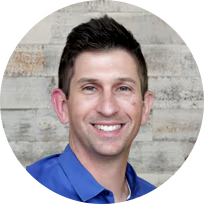
Steve Halter, SVP, Solutions Engineering, Arm
Steve leads the team that works closely with Arm’s world-class partner ecosystem to develop and accelerate Arm technologies as we keep ahead of changing market needs.
His career spans more than 30 years in semiconductor architecture, SoC design, and engineering leadership. Before becoming Senior Vice President of Solutions Engineering, Steve served as Vice President of SoC Architecture at Arm, where he guided the design and integration of next-generation SoC platforms across Arm’s ecosystem.
Prior to joining Arm, Steve held senior engineering roles at Intel and NXP Semiconductors, where he led global teams delivering advanced automotive, edge, and high-performance SoCs. He spent over two decades at Qualcomm, where he helped define the architectural roadmap for Snapdragon SoCs and managed worldwide design teams responsible for key system IP and platform innovations across mobile and emerging compute markets.
Steve holds Bachelor of Science and Master of Science degrees in Electrical and Computer Engineering from the University of California, San Diego.
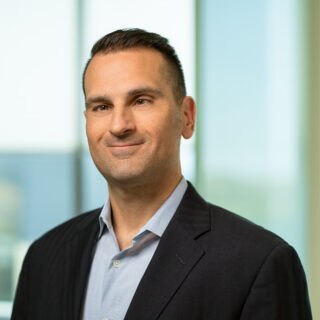
Eric Hayes, EVP Operations, Arm
Eric leads end-to-end execution of operational activities across multiple products and solutions, focused on enabling continued growth, at scale, across key markets. Eric is an industry veteran with decades of experience growing and optimizing technology businesses, driving multiple corporate acquisitions, and overseeing the development of engineering and product organizations.
Prior to Arm, Eric was CEO at Fungible, until it was acquired by Microsoft Corp. in 2023, where he led the organization to focus on product market fit and shipping silicon and systems. Eric also served as senior vice president and general manager at Inphi Corporation where he led the company’s multi-hundred-billion-dollar PAM4 DSP business and has held senior leadership roles at Marvell Technology, Cavium, Inc. and Broadcom Inc.
Eric holds a B.S. in electrical engineering from the Georgia Institute of Technology and has completed executive education courses at The University of Chicago Booth School of Business.

Dermot O'Driscoll, VP of Product Solutions, Arm Cloud AI BU
Dermot’s responsibilities include definition, delivery and successful deployment of Arm-based products across the Infrastructure segments. With a detailed knowledge of data center and networking applications he leads the team responsible for Arm’s IP and Software products in those markets.
Dermot works with Arm’s silicon partners to support the development of their products. He also engages end customers in the cloud and telecom industries to ensure successful deployment of efficient Arm-based solutions.
Dermot has a long history of IT, EDA, CPU and SoC design experience at Arm and has been with the company for over 20 years in various engineering and management roles. He received his bachelor’s degree in electronics engineering and masters in microelectronics from Edinburgh University, Scotland.
Brian Fuller, Host
Brian Fuller is an experienced writer, journalist and communications/content marketing strategist specializing in both traditional publishing and emerging digital technologies. He has held various leadership roles, currently as Editor-in-Chief at Arm and formerly at Cadence Design Systems, Inc.
Prior to his content-marketing work inside corporations, he was a wire-service reporter and business editor before joining EE Times and spending nearly 20 years there in various roles, including editor-in-chief and publisher. He holds a B.A. in English from UCLA.
Brian:
Welcome to this special episode of the Arm Viewpoints podcast recorded live at Arm Everywhere on March 24, 2026. It was a defining moment for AI compute and an historic first for Arm. In this session, you’ll hear from four leaders who’ve been central to that journey:
Will Abbey, Arm’s Chief Commercial Officer, Dermot O’Driscoll, VP of Product Solutions for Cloud AI, Steve Halter, who leads Solutions Engineering, and Eric Hayes, EVP of Operations. In this conversation, they bring a critical lens on how you actually scale from supply chain to manufacturing to meet the explosive demand for AI compute. Together, they unpack the story behind the AGI CPU how Arm moved from mobile roots into the heart of the data center, what it takes to evolve from full IP to full compute subsystems and now to silicon, and why performance per watt, scalability, and ecosystem collaboration are becoming defining factors in the AI age.
They also explore how partnerships have shaped this journey, and they look ahead to what an agentic AI future demands from compute and the role that Arm aims to play at the center of it. Let’s get right to it.
Will:
Good afternoon, welcome to each and every one of you. I am somewhat surprised that there are so many of you in this panel discussion. Some of you, I know you had no choice because you work for me and so I want to thank you for sticking around. The good news is after this session, there is beer being served and so you’ve stayed for a really good and important discussion
Steve: During the session.
Will: Not during this at the end of the session. Look, transformative day. There’s no doubt about that. For a guy like me who has been at arm for 22 years, I remember the days when we were looking forward to getting to 2 billion cumulative chips being shipped.
And so the fact that we talk about the fact that 350 billion chips have been shipped cumulatively is a highlight for me. But I never thought I’d see this day coming, a day when I would make available the AGI chip. And so it is clearly a historical day. It’s an important day. It’s a fabulous day. A lot has been said today about the infrastructure build out. A lot has been said about the demand that the industry has seen over the last 18 months. And again, I’m not going to cover old ground, but we recognize that the infrastructure build out is real. We recognize that the traditional systems can’t keep up with that demand. And so a lot of the purpose or the purpose of today’s discussion
is really to give you guys a perspective of the journey that we have been on within Arm. Oftentimes, the destination is clear, we have a chip, but how did we get there? What has that journey been like within Arm? And so I’m gonna use my colleagues, I’m gonna use this panel discussion to give you a perspective of the journey that we’ve been on, but more importantly, to talk about…
what that means to you, our customers, our partners, and some of you guys who may be investors. We want to try and give you a perspective of the journey that we’ve been on and what that means to the industry. And I’m not going to do that alone. I’m going to lean on the expertise that the 100 years of semiconductor experience cumulatively that is sat here.
So why don’t you just quickly just introduce yourselves. Again, keep it brief because we’ve only got 30 minutes. Let me start on my left with Dermot and then we’ll move along.
Dermot: Dermot O’Driscoll, VP of product solutions for the Cloud AI business unit.
Steve: Steve Halter, responsible for the solutions engineering team.
Eric: Eric Hayes, the executive vice president of operations.
Will: Thank you, I guess I should also introduce myself. My name is Will Abbey, I’m the Chief Commercial Officer of as I said, 22 years. And so, a lot could be said about the growth trajectory of Arm over the last 35 years. Today, we’re really gonna focus on the infrastructure as we think about performance per watt, as we think about certainty in terms of supply chain, as we think about the scale out.
that the industry needs to be able to meet this AI demand. I want to go back to 2012, 2013, when this journey of entering into the data center space began. And I can’t think of anyone that’s old enough, that’s been around long enough to kind of walk us through that journey so Dermot let me start off with you so take us back to 2010, 11, 12 when we started to think about this data center market and entering into it, walk us through that journey.
Dermot: For sure. So at that point in time, we were mostly building cores deployed in the client market, in the mobile market. We were very successful in that market but really didn’t have a very good understanding of what we at the time called infrastructure or data center market. The data center market itself was pretty nascent, pretty new.
We were licensing cores into a market that was adjacent to the client market, but I don’t think we as a company had a really good understanding of that market at that time. At around the 2014-2015 timeframe, I got a call from my boss at the time, and this is a common thread for me, which was, hey, we’re thinking about doing something in this space. We’re thinking about doing something in this space. Are you interested in leading it?
At the time I was running, actually something similar to what Steve does, was leading an SoC team inside Arm. And I’d been doing it for a few years, I was getting a little bored, and I jumped at it. I jumped at it. I gave it 12 hours so it wouldn’t look like I was completely jumping at it, but I said, okay, I’m ready to do this. So a team of three of us set up Arm’s initial, what we called Advanced Server Team, AST.
It was very much a play on words of advanced server team because we really didn’t know that much about servers. And that’s kind of where we started was the idea that if we engage the customers and we listen to the customers, that would drive us to build the right products and that would actually help us understand the market and sort of build around that. Y
Will: Talk to us, talk to me about the ecosystem of partners during those early years of 2012-2013, because today we talk about the hyperscalers, the CSPs, we talk about the Neo Clouds, and we talk about the breadth and depth of the partnership for the cloud AI marketplace, which we call the infrastructure. So if you go back to 2012, how many customers were there?
Dermot: You know, it’s funny, there was actually, if you went through the list, right, you had a couple of startups that we actually helped kick off, one called Calxeda, another one who we were partnering with, but many of these guys were building silicon based on their own CPUs, so they had taken an architecture license from Arm. We were quite happy because, again, we didn’t really understand the market that well at the time. To do architecture licenses with these companies and say, you guys understand the market, go build an SoC that will address the market. So that was kind of where this all started.
But over time, what those companies realized is, they were kind of innovating in the wrong space. They were innovating at a CPU microarchitectural level rather than at an SoC level. little by little, companies came back to us and said, hey, we need you to build IP that has the right virtualization support, has the right scale of mesh and interconnects that allows us to build a many core SoC. So that was the first point at which the management said, you know what, we think we should actually have a separate concept and a separate line of products, a separate branding around the data center. And that was sort of, we’re talking now the 2017-2018 timeframe when we’d already gotten our heads in the market, we’d started to understand the workloads, we started to understand what people cared about in the market. And that kind of combined with Amazon showing up and saying, we think your latest IP with some tweaks, with some additional feature set, could be really good at running data center workloads. What do you guys think? Would you guys be interested?
Now Amazon had been a customer since, well you’d remember, probably 2012-2013?
Will: Yeah, yeah. Right? Go ahead. mean, look, the important point about that particular journey is that the first time Amazon engaged with Arm, be telling a story not me. It wasn’t in the data center space, or perhaps it was, but it was the DPU.
Dermot: It was networking.
Will: Last question for you. Just talk to us about that journey from DPU to Amazon being the lighthouse partner they are today, and what was unique about that journey.
Dermot: Yeah, so Amazon was that customer who said to us, we’re not as worried about the software ecosystem. Every customer prior to that had said software ecosystem is not ready. They said, we can help you build a software ecosystem. We can be your partner to build out all of the software, the Java, all the user profiles, all of this, and give us the right IP. Amazon set out their stall for doing that, and that drew other customers towards us. But what some of these other customers were looking for was even more fully integrated solution from us. at that point, we brought in some new management to drive the business unit.
And we say, you know what, we should do pre-integrated compute subsystems. This is something that there’s demand for in the market. Customers don’t want to do all the stitching of our IP. They’d rather get it from us as a complete integrated, validated, performance analyzed CSS.
Will: Dermot, thank you so much. I think you said some key words there. Compute subsystems. The fact that the market wanted Arm to deliver more than just the IP. And so that sort of brings me on to you, Steve. You have a wealth of experience in designing and architecting complex chips. Roughly 30 years of industrial experience, perhaps maybe even 35. Talk to us about your experience of building world-class chip engineering teams.
Steve: Well, think so. I think one thing really focused on putting the team together for these SoC projects, RST projects, is we’re willing for a product team. We are a product organization, we are focused on doing products. We’re not a research team. So I needed to look for individuals that really had that high volume SoC product experience. They knew how to design chips, they knew how to hit schedules, knew how to make hard trade off decisions in terms of we’ve got certain area targets you can hit, power targets, performance targets, function feature targets. How do we do that all in the schedule, in the cost framework to actually meet the customer specifications, the BU specifications on time?
So I was looking for individuals who had that deep product experience, that know how to do high volume silicon, and to know all the problems that can come out in a silicon space, in a chip space. We really focus on these projects or products, these CPUs coming out, and no matter what the customer usage is gonna be, no matter what the use case, no matter how they’re gonna use it, and you see all the customers and all the excitement we have and all the people interested in it. We don’t know how well they’re going to use it. There’s an infinite number of applications.
And there’s a certain mindset, there’s certainly a paranoia, if you will, how we address that and make sure that really happens. And how we test it, how we put together decisions we make, et cetera. I need individuals who had lived that multiple generations of product historically, part of the team. We need folks who are experienced in data center.
Not all of us have data center background. Some of us came from different spaces, so we need folks experiencing data center. So we look for folks that have that kind of background. And then we also look for folks that augment the existing Arm skillset. So Arm obviously has a storied history delivering world-class IP. And whether it be CPU cores, the CSSs, et cetera, they have a great amount of Arm. Arm has a great wealth of experience here in that space. But we need to focus on more experience in packaging, the back-end work, some of the SoC-specific architecture aspects, putting on the other aspects of the SoC outside just the CSS. CSS focuses on Arm’s core technology, but we need to add in the DDR interfaces, PCIe, the die-to-die, et cetera. So we had to augment all that skill set to build the SE team within Solutions Engineering to deliver this kind of product. And that’s really how we approached it. Thank you.
Will: I met you in a prior life at a different company at a different time. What was it about Arm, an IP company that intrigued you enough to kind of leave where you were at and come and join us?
Steve: So I think the opportunity here is really, really unique. mean, an established, successful company like Arm making this kind of a pivot into where this kind of, expansion into a SoC product space and being able to part of that kind of almost green field environment, an opportunity to build it up from almost from the ground up, it’s an opportunity that doesn’t get around too often, right? I think it’s an opportunity that almost any ministry would jump at. And the opportunities to go in this space at this point in time, in this area, I mean, what’s hottest area technology right now? It’s AI. And it’s these AI inference and training and other time solutions and having a product like the AGI CPU that’s going be right at the heart of that. I don’t know what a better opportunity is out there. Anybody would jump at this one. So it was an easy decision. It was a very easy decision.
Will: I’ve stayed here for 22 years. I think I’ll probably stay here for another 22 years as long as I have the energy to do that because of the fact that we’re in the midst of this Agentic AI wave. We have all the elements to go off and be successful. And I’ve been people like you and Eric join, I think for me and the teams that you’ve brought are the missing pieces. But before I move on to Eric, a question that the folks have asked me quite a few times and it was talked about today. You you’ve got the IP business, you’ve got the CSS business and now you’ve got this chip business, and they’re not completely distinct. I think they build on each other.
Steve: Absolutely.
Will: Help me understand and help the audience understand, how are we using the Arm IP portfolio, the Arm CSS portfolio to build the AGI chips?
Steve: Yeah, so CSS really is the foundation of the AGI CPU design. think one thing that, in the industry, I think it’s well understood within the technical space. I’m not sure how well understood it is in the general space, but one thing Arm does really, really well is they don’t think at just an IP level, or we don’t think just an IP level. We think at the system level. Arm produces, that’s really what the CSS is doing. Arm’s CSS is really saying, here’s the CPU core, which Arm’s obviously known for, but here’s how the CPU core should work in a larger system. Here are all the system components around the CPU core that are needed to make the whole system work. The interconnect, the memory virtualization components, the MMUs. All the other pieces, the GIC. And here’s how Arm is architected to fit together and actually be performant in a real solution. And here it is, all of our partners, here is how you can build your SoCs very, very quickly with the CSS. We took all that learning, all that knowledge, that was the jumpstart, that was the foundation of the AGI CPU. It was a tremendous advantage. Same advantage that Mohammed and Rene talked about on stage today. A year, 18 months, whatever you want to say it. That got us going very, very quickly. And then we could build around that and use that, know, obviously, you know, customize it or the right configuration for this specific CPU device, SoC. But it was, you know, that was such an important aspect of the development process, that foundation to get us going very, quickly. And a very, very successful product. I mean, it’s up and running from the jump. It’s very healthy.
Will: I also think as we build world-class chips, it’s also going to influence the IPs that we build for the next generation. So it becomes a virtuous circle.
Steve: We have all kinds of suggestions for improvements.
Will: Okay, there you go. All kinds. There you go. Eric, you’ve been super, super patient. And I think it’s clearly important to have a world-class engineering team to build a world-class chip. But I think there’s more to it than that. What do you do again? Tell me, remind me what you do and remind the audience exactly what you do and why you joined us.
Eric: So, my name is Eric Hayes. I’m executive nice president, operations, and what I’m responsible for is supply chain, planning, logistics, manufacturing, product, quality test, cross-functional program management, and really all the processes in the company that drive the day-to-day operations.
And when Rene asked me to join the company and come in, think for me the most important thing was to bring in the right people, right? It starts with the right people and it starts with people that came from semiconductor companies, people that came from hyperscale companies, people who have experience in buying and shipping very high-volume products. And all of that really starts with quality. Everything we do is centered around quality. It’s really the beginning of everything.
When we look at our supply chain and we made this migration from thinking about IP as a product life cycle to more of manufacturing readiness and manufacturing life cycle, and we put our supply chain together, it’s an audited supply chain. Our quality team goes in and applies an FMEA process to all of our products, to all of our processes to ensure high quality. It’s really the beginning of it.
And the number two thing is ensuring that we have the ability to meet our customers’ requirements. And those requirements are around volume ramps, ensuring that we can achieve those capacities, assuring that we could do that with the quality that’s required and satisfy the customer needs.
Will: Eric, I mean, so I think the head count at Arm now is about 9,000 people. I mean, we’re growing pretty fast. can’t keep count of the exact number, but it’s interesting that when you came into the organization, we didn’t particularly have an organization that could help us scale out and put in place the team that’s needed to kind of supply the multiple customers that we’ve heard talk about today. And I think that’s going to grow over time.
So how have you gone about sort of building this organization from scratch?
Eric: Well, sure. mean, first it was, you for me, it’s about to understand first. So I came into the organization and I met with as many people as I could. And I found that we had a lot of these skill sets but distributed throughout the organization. And I brought all those people together and I created a summit and asked them what they were doing and understood what their goals are and what their needs are over the next year, over the next three years. And at end of that meeting, everybody got together and said, we need to be a team. And we came together as a team and we identified the rest of the gaps that were required and we put a plan in place and went and executed on it.
Will: Well thank you, thank you so much. I’m not quite sure how we’re doing for time. I’ve got one question left for you guys. perhaps…
Dermot: Actually I’ve got a question for you.
Will: Well, that’s not in the script. I’m sorry. You can’t ask me a question. I’m the moderator.
Dermot: I think I can ask you a question.
Will: Alright, fire away.
Dermot: So one of the questions that we get every once in a while is, so you guys are now building silicon and your customers build silicon. How do your customers feel about you building silicon?
Will: A couple of factors which are true, that the scale of the opportunity is vast, right? It really is. And as we began to explain to the customers, how we will stand by them, how they can stand on top of our shoulders and build product, how the fact that this market needs optionality. The more we began to talk to them, the more it resonated with them. And so I think you heard in the room today, across the breadth of the ecosystem, the fact that partners are excited by the fact that we’re joining the optionality that the market needs. Whether it’s cloud guys wanting to take the same software investment into the enterprise into on-prem and looking for solutions, whether it’s OEMs looking for diversity of supply in terms of silicon capabilities. And so those early sort of uncomfortable conversations have changed to conversations of excitement that you saw brought out today from the lineup of partners were excited at the fact that we’re joining the arsenal of options that they may have as they think about silicon solutions.
A couple of things which are true, which have been talked about a lot: The demand outpaces the supply today, we can kind of see that. The elements that are important to arm around performance and performance per watt and density, those things resonate extremely well. And so, you know, so proud of the idea that
We lined up breadth and depth of partners who are willing to say the AGI silicon from Arm is going to make a meaningful difference. so I’m thrilled by today and thrilled by the number of partners that are excited by what we’re offering. So that’s the only question I’m going to allow you to ask me. So as we come to the end of today’s session, I talked about the 100 plus years of industry experience that is on this panel.
My question to you is, as you think about the agentic world that we’re stepping into, as you envisage where Arm needs to go, what do you think the future holds for Arm in this AI agentic world?
Let me start with, Eric, you’re poised already, so you can’t get, you’re ready to get going, so what does the future look like? What does look like?
Eric: The question is really near and dear to my heart.
Will: What does the future look like and what role will Arm play in that future?
Eric: It’s a great question because when I joined Arm, that’s the way I viewed it. And I see Arm is everywhere. And AI is everywhere. So it’s the first fit. Arm is I look at the growth of this ecosystem. Rene spoke about the ecosystem of ecosystems, and I watched this over the past 25 years. I watched this expansion from one market segment to the next market segment, and I watched the market leaders in each of those market segments adopt Arm and proliferate the Arm technology. And I’m watching this migration from what was traditional compute to AI compute.
And I’m seeing every one of those leaders leverage what they have in arm. Every one of those ecosystems leverage what they have in arm to move into AI. That’s what got me excited about this opportunity to come here and help drive that mission.
Will: Thank you. Let me jump to Dermot and then I’ll let you have the penultimate last words because I’m going to finish off as I always like to finish off. So same question to you, Dermot.
Dermot: Yeah, I mean, it feels like we’re at the very early stages of AI. And it feels like the demand curve for AI solutions across broad set of markets. And I have the luxury of engaging across arms product teams with our edge AI and our physical AI teams, as you know. And I see it across the whole spectrum. The desire, whether it’s in the robotics and autonomy space, whether it’s in the on-device space. for AI solutions that are credible and helpful. And I think we’re just, right now, we’re just beginning to see what the opportunity looks like. And I think we’re going to see that. That’s going to pull more and more arm technology into that space. Coming back to slightly riff on one of the other questions you asked, which is, you know, or actually the question I asked you, which is, you know, silicon versus IP. I don’t think it’s silicon versus IP. I think it’s the genius of the end, right? And we have customers who are saying to us, ‘we’re going to build an AI accelerator. We’re going to build an NPU. In fact, I met a couple of them today. And we’d really like to plug it into your AGI CPU because we see that we don’t need to build that silicon. We can build the silicon that we need to build and we can mate it with the silicon that you’re building and it’s additive. And now we’ve got Arm-based NPU running software that can migrate seamlessly across to an Arm-based CPU.’
So I think that that’s… you know, I see this thing just becoming bigger and bigger as we go through time. Completely agree and thank you so much. I think you’ve held every potential role, every possible role within Arm. I think the next step for this guy is to join the sales team. From engineering to operations to a product group, I we should have you in sales next.
Dermot: All right, make it work my while.
Will: All right. So Steve, last words. What does the future hold for the industry and what role will Arm play in that future?
Steve: I think it’s I look forward and I kind of see what’s going on in industry right now, how fast this technology is advancing. mean, without exaggeration, every week is something new, right? I mean, as Rene noted a few months ago, there was no attention on CPUs. Now, suddenly we realize, holy moly, we need CPUs and we need to compute like mad to support this growing ecosystem of agentic devices or agentic features and capabilities. I think what
I don’t I feel I haven’t spent a lot of time worrying what’s going to happen in the future because we’ve built such a flexible, scalable platform here with the AGI CPU. It’s not tailored to one specific application. It’s not scaled to what was now or what was today. It’s going to adapt. It can be flexible to whatever comes out in the future. I think it’s not tied to any one application. And we’ve got a robust roadmap of this.
So I’m not so worried what may or may not be out there. I don’t really have to predict the future. I think we the right solution to adapt whatever’s gonna be out there.
Will: Perfect, thank you. Thank you, Eric. Thank you, Steve. And thank you, Dermot. But more importantly, thank all of you for sticking around. I know it’s been a long, long day. think beers and drinks are gonna be served.
But for me, the key takeaway is this. We’re clearly expanding the ecosystem. We’re doing that. We are continuing to innovate not just at the IP level. We’ve augmented that. We augmented innovation at the IP level to CSS. And now you’ve heard a talk about the fact that we’re expanding to silicon collaboration. The thing for me that makes Arm unique is this openness. And so we’re going to continue to meet customers where they’re at. The analogy for me is that it’s a three-layer cake: IP at the foundation. Compute subsystems in the middle and the silicon collaborations at the top.
Whether you want the whole cake or you want to slice the cake, because of the open nature of how we operate, we’re going to continue to make that choice available to you, our partners. Our commitment is to continue to innovate, continue to go ahead and continue to listen to you and provide world-class solutions, whether it’s at the IP level, whether it’s at the CSS level, or whether now it’s at the silicon collaboration level. We’re going to continue to innovate in all three areas.
Thank you for listening, thank you for attending today and then go off and grab yourself a beer. Thank you.
Stay informed with Arm's top stories, insights, and conversations.