Tech Unheard episode 12: Panos Panay
Podcast episode also available on the following channels:
Summary
Panos Panay, Senior Vice President of Amazon Devices and Services, joins Arm CEO Rene Haas to discuss his journey from building Microsoft Surface to leading AI-powered consumer products at Amazon. They explore product-led leadership, learning from early bets, and how empathy, clarity and customer obsession shape teams — and technology — that endure.

Rene Haas, CEO, Arm
Rene was appointed Chief Executive Officer and to the Arm Board in February 2022. Prior to being appointed CEO, Rene was President of Arm’s IP Products Group (IPG) from January 2017. Under his leadership, Rene transformed IPG to focus on key solutions for vertical markets with a more diversified product portfolio and increased investment in the Arm software ecosystem. Rene joined Arm in October 2013 as Vice President of Strategic Alliances and two years later was appointed to the Executive Committee and named Arm’s Chief Commercial Officer in charge of global sales and marketing.
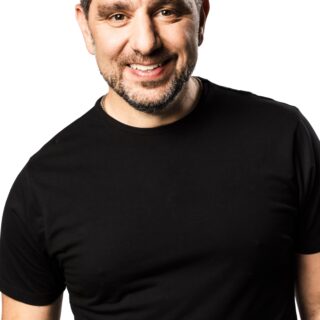
Panos Panay, Senior Vice President at Amazon Devices & Services
Panay leads Amazon’s Devices & Services organization, overseeing consumer electronics such as Alexa, Echo, Fire TV, Kindle, Ring, eero, Blink, and related future-looking initiatives including Zoox and Project Kuiper. He joined Amazon in late 2023 after nearly two decades at Microsoft, where he became widely known as the creator and chief visionary behind the Surface line of devices and played a key role in the development of Windows 11.
At Microsoft, Panay rose through multiple hardware and product leadership roles to become executive vice president and chief product officer, leading the Windows + Devices division and shaping both hardware and software strategy for the company’s PCs and related experiences.
Rene Haas (0:07)
Welcome to Tech Unheard, the podcast that takes you behind the scenes of the most exciting developments in technology. I’m Rene Haas , your host and CEO of Arm. Today I’m joined by Panos Panay , Senior Vice President of Amazon Devices and Services. Before Amazon, Panos spent two decades at Microsoft, where he led the vision and strategy for their Windows and devices division, including Windows 365, Windows 11, and the Microsoft Surface lines. In his role at Amazon, where he’s been for about two years now, Panos has launched Alexa Plus, and is increasingly focused on AI and consumer devices. I’m glad to have him here to talk about it.
Welcome to Tech Unheard.
Panos Panay (0:42)
What’s going on, brother?
Rene Haas (0:43)
Good to see you.
Panos Panay (0:44)
It’s great to see you.
Rene Haas (0:45)
Glad to see you live and in person.
Panos Panay (0:47)
It’s been a bit.
Rene Haas (0:48)
It’s been a bit.
Panos Panay (0:49)
It’s been a minute. I feel like you’ve been running the world over here.
Rene Haas (0:54)
I’m in charge of the world. I’m not sure I’m running the world.
Panos Panay (0:55)
Okay. Yeah, maybe in charge of it. How is it going over here?
Rene Haas (0:58)
Things are good. Yeah, things are incredibly busy in our world, your world.
Panos Panay (1:02)
Yeah.
Rene Haas (1:03)
You know, technology never stops, but we’re now in a point in time where it just seems like the next 10 to 15 years are going to be something unbelievable.
Panos Panay (1:11)
It’s an incredible time. It’s a transformative time. Like in our lifetimes or our careers, like, for sure, this is the biggest shift. Would you agree?
Rene Haas (1:19)
Totally. Totally. You know, I tell folks that and I am sure you get the same question all the time about are we in an AI bubble, which I think is just complete nonsense. But I also believe that not only obviously machines thinking the way humans do and perhaps even more, obviously what’s going to happen but a ‘not in our lifetime’ kind of thing, a Star Trek kind of thing. The fact that we’re in the midst of it and it’s all going to happen is amazing on so many levels. Scary on a lot of levels, which we’ll chat about. But thank you for joining today.
You know, one of the things I like to do, you know, Panos, you and I know each other super well, but our listeners don’t know you – in your terms of your background and how you got to where you are. So I love to sort of start with a, kind of, ‘tell us kind of how you got to where you are’. What got you into this kind of world of technology and products and creation?
Panos Panay (2:04)
You know, at about 28, 30, I don’t know, I joined a Japanese company, an electromechanical company. I worked there for five, six years. It opened the door to so many beautiful things, like from a design standpoint, from an engineering standpoint, from a product standpoint. And I was working on electromechanical devices. So you do keyboards, mice, speakers, power supplies, you know, all hardware. And I mean, I fell in love with the hands-on – but back there, keep in mind, it was all 2D drawings and everything was like – CAD was literally hand-done. You know, I was in the L.A. area and I was born and raised in the L.A. area, so that’s my home. And you know, Microsoft came knocking and had offered me to, you know, jump into, if you will, hardware at Microsoft. And I remember sitting–
Rene Haas (2:50)
Hardware at the largest software company on the planet.
Panos Panay (2:52)
Right. That’s right. I mean, it’s Microsoft. And so – you know, I remember talking to my dad about it and coming from, you know, I’m Cypriot. Good, very tight, you know, ‘My Big Fat Greek Wedding’ type of family. Everybody, everybody is in the L.A. area, if not Greece or Cyprus. And, you know, to go to your dad and mom to have that conversation, you know ‘Dad, I think I have this incredible opportunity, but it’s in Seattle, and it’s working for Microsoft doing hardware. And he’s like, ‘What exactly – what you said…’
Rene Haas (3:29)
What can go wrong?
Panos Panay (3:30)
Yeah. ‘What are you talking about?’ But you know, there was this real intersection – my brother’s a movie producer, and, you know, Xbox had just started, and there was Xbox Live just coming online. There was all these intersections of entertainment, technology, computers, physical hardware, those connection points. It was clear things were changing. I had written a paper on where I thought my brother’s industry and my industry would collide one day. And I had, you know, I had these thoughts. And so I started at Microsoft about 20, you know, that was 24 or 23 years ago, something like that.
Rene Haas (4:04)
And hardware at that time at Microsoft was –
Panos Panay (4:07)
Mice and keyboards.
Rene Haas (4:08)
Mice and keyboards. The mice were great. Yeah, they were. They were actually the look and feel and the movement.
Panos Panay (4:14)
Yeah, people loved them. I mean, they’re built from, you know, thinking about the customer first and comfort and all these things that make a great product. But I think they were also doing Xbox at the time, like just starting, you know, ramping it. And yeah, it was just an exciting time where you can start to see, to really wrap, you know, wrap the benefits of software up for a customer in what was coming. Not that much different now with AI. You know, you need an endpoint, something that people could purchase and use. And so it felt like the perfect intersection. The only challenge was like moving to the Pacific Northwest from L.A. I don’t think I can move back to L.A. now. No offense to all my family and friends in L.A., because once you adapt to the Pacific Northwest, it just becomes part of you. And I mean, I love it.
Rene Haas (4:57)
But you wear a hoodie and you’re always ready for rain.
Panos Panay (5:00)
It’s darker, for sure. It’s colder, it’s a little bit more wet. But there’s not – you can’t beat the summers, Rene.
Rene Haas (5:05)
Yeah.
Panos Panay (5:06)
So 20 years or so, Microsoft doing hardware, you know, my journey started with mice and keyboards in that business unit and we added webcams and that was a big endeavor. And it turns out cameras matter.
Rene Haas (5:17)
A hundred percent.
Panos Panay (5:17)
And then some gaming stuff and just the portfolio kept expanding. I think you and I were on the first Surface together, if you remember that. You know, you were at NVIDIA at the time, I was building the first Surface, we were building out on Arm. It was kind of a crazy time. I’ll come back to it if you want, but then –
Rene Haas (5:32)
One thing that’s constant is Arm from that discussion. It’s – you’re at Amazon. I’m here. And by the way, that product was pretty revolutionary in many ways. I remember the first time you showed me the touch – there was a keyboard, it was a very flat keyboard that literally was, there was no tactile feedback on touch.
Panos Panay (5:49)
Oh, you remember that?
Rene Haas (5:50)
But it was beautiful.
Panos Panay (5:51)
I hardly remember that at this point, Rene.
Rene Haas (5:53)
But I remember it just in terms of how innovative it was. And it was touch before kind of touch was there – tell me a little about what the thinking was behind that? Because I remember when that came out, thinking, ‘that’s a revolutionary play. That’s a very unique –’
Panos Panay (5:38)
There were a couple of things that were kind of transformative at that time for that product. I’ll say that first one wasn’t all that successful either, if you remember, correct?
Rene Haas (5:46)
Yeah.
Panos Panay (6:08)
But there were a couple of things. One, we were building Windows on Arm. And it’s kind of the first time laying down the silicon all the way through the software to get it right. That was some big thinking. And, you know, eventually it’s been delivered. It took ten years, but I think, you know, the product was a little bit ahead of its time that way, kind of lower power profile speeds and feeds. And then you had just the design element and this is – we really wanted to create an object of desire, is what I would say. And, you know, you can’t create something that you say, look, it’s beautiful because it’s like, you know, when you bring your kid to the party and say, look how smart my kid is, it doesn’t work that way. You know, look how beautiful my code is. I think that’s for other people to assess, because you have such a bias. But I think at that time we did want to build something that people thought was amazing from an object standpoint, something you purchase. And that kind of translates now into my Amazon work.
Rene Haas (7:09)
Would you have done anything different? I mean, yes, the product was probably early from the standpoint of – software for Arm clearly was not ready. I remember one of the first reviewers I met with, going through the application stack and the reviewer said, ‘does it run iTunes?’ And of course, the answer to that question was ‘no’. And he kind of just closed his notebook and said, ‘you know, game over’. And looking back, you know, I smile at that. But if you think back in terms of, ‘gosh, had we done X and Y, Z a little bit differently, the outcome might have been in a different way’ or was just, ‘you know what? We just had to learn, had to get the first one out there.’
Panos Panay (7:40)
Yeah, I think it’s okay to say it’s good to learn. I think if you were to say when you’re making a big bet, sometimes you might be early and that’s okay. You just have to recognize where you’ve made decisions that are wrong or you have to stop and shift and turn, adjust. I think that’s probably the most important thing to be thinking about when you’re making a big bet. But if I harken back to the days and we’re talking 14 years ago now, so this is like – I mean, is that right? I think about that – 14, 13 something.
Rene Haas (8:11)
2000, I think we started in 2009, 2010. Because the product came out in ‘12.
Panos Panay (8:16)
The product came out October 26, 2012. I remember that day like a lightning rod, but I think 2009, ‘10 we start. So 14, 15 years ago? If I could go back like and tell you like what would we have done different to make that successful? There’s – I think it would have been, ‘Wait.’
Rene Haas (8:33)
Mm hmm.
Panos Panay (8:34)
And that’s – I know that sounds crazy, but then I don’t think the future then comes either.
Rene Haas (8:38)
Yeah.
Panos Panay (8:39)
Like, if you don’t take the risk, if you don’t lay down the vision and stick to it and get after it and learn from it, then I don’t think the evolution comes either. So you can argue you’re too early. And in this case, we were. One, you know, you needed more bake time for Windows on Arm. You needed a developer community to come along. Your tool sets need to be better, the platform need to be better, for that’s sake. And if you did have more developers, you’d have more apps. And if all the apps came…but that’s obviously a chicken and egg problem. Like there wasn’t enough Arm devices for a developer to really care. I mean, this is a long time ago. I don’t think, though, if you changed the thinking early and you knew every one of those answers that the product would have found its way into success in its first generation anyway. The argument for success on any first-generation product can be – not only – can be, like you can have a hit in first gen, there’s plenty of those. But it is, what did you learn? What did you take away from it? Did you establish a team that stuck together? Was that team passionate and compassionate about their customers? And then ultimately, were they willing to understand where the failure was with objectivity, which is pretty tricky because, you know, nobody really wants to be judged. And, you know, you’re managing so many different elements around that. But I think if we didn’t go after it, and I would say that about any early product. Now, you can argue, should we have taken it out of the lab or should we have released it? I think maybe there’s a debate, but I – or just get that far and go to the next round – I think even launching it gave you the learnings that you needed.
Rene Haas (10:07)
I think though, you’re right, because if you had the stick-to-it-ness to continue to get the full stack of learning – I remember Jensen and I were talking about that, in fact we even talked about on this podcast. Back in the day, and if you remember, NVIDIA was building a product called Shield.
Panos Panay (10:21)
I fully remember.
Rene Haas (10:22)
Yeah, we were trying to do handheld controllers and literally I remember where the bomb was about $150 larger than what we thought the selling price should be. We were dealing with subcontractors in Taiwan. We had to get a procurement channel set up.
Panos Panay (10:34)
This sounds so familiar.
Rene Haas (10:37)
But, you know, I asked Jensen about that product, which, by the way, he sold minutiae, and the company didn’t make a lot of money on it. But his point was, ‘we learned how to do DGX. That helped us become a system company.’ And now you look at what NVIDIA’s done, obviously, you know, the muscle memory that they built. But I think to your point, getting through the entire process, and you raise a very, very good point of building a team that is resilient, that is passionate, that understands what’s going to take to go build the next one, is just immeasurable.
Panos Panay (11:06)
Yeah, yeah. Agreed. And I think that’s where you get to it on any product you build. If you don’t start with the team first, Rene, and a team that’s aligned to a vision, I don’t think you get to that resilience over time. I think it’s just kind of pieced together portions and the team doesn’t grow and then the products won’t grow behind it either.
Rene Haas (11:23)
Was the vision clear for that, for what you guys were doing, you think to the employees? Did the employees kind of understand the big picture you guys were trying to do?
Panos Panay (11:30)
You’re talking 14 years ago, back to that?
Rene Haas (11:31)
Yeah, yeah, yeah.
Panos Panay (11:32)
I think it was. I think, I mean if I were being vocally self-critical thinking back, I would say there are plenty of things we could have done better. But I think it is important to plant that flag on the mission and make sure people want to be part of that. And at that time, it was clear. Now, was it right? I think we could debate if it was right, but was it clear? I think we were pretty explicitly clear on what we were trying to do. It’s why we had started that product. Think of this – no supply chain, no manufacturing, no real procurement. We partnered with NVIDIA at the time. They didn’t really have an Arm part yet, if you remember. I mean, that was you.
Rene Haas (12:07)
I remember. Yeah, we had nothing.
Panos Panay (12:11)
And we made all these bets, and 19 months later, 18 months later, we were shipping. You can’t do that unless you’re very clear on what your vision and mission are. But I also think – and by the way, what a tremendous feat by that team. And I work with many of them still today. I would say, it may not have been right. It may have been, you know, too ambitious or too early. But I would be dismissive of all that because I would still say, as long as it’s clear. Even if it’s wrong. Now I’ve learned some valuable lessons. You know, Amazon talks about one-way and two-way door decisions and you want to be right on the one-way door decisions, like the ones you just can’t turn back from. But on the two-way door decisions, like, I think it’s okay to work faster with your instinct, use as much data as you have, and if you don’t have more data, make the call. And if you can come back to it when you do have more data, I think that’s the definition of great leadership. And so if you tie it back to those days, you know, I think a lot of what we did were two-way door decisions because you can just see at the end of the day, you were able to learn and continue.
Rene Haas (13:12)
For sure. How do you get alignment across an engineering team for how to execute on the vision. You know one of the things that I spend a lot of time here at Arm – our CFO Jason Child is ex-Amazon and we use the one-way door, two-way door language quite a bit between him and I.
Panos Panay (13:29)
Yeah, good. It’s very powerful.
Rene Haas (13:31)
It’s very, very powerful. And then when we kind of get into, ‘okay, if we’re in a two-way door world, you may be pivoting, you may be coming in the door and going out the door, etc., etc.’ Some people say, ‘look, that kind of change is too much churn. I can’t get my head around it.’ But if people are aligned with the big picture, they get comfortable with the two-way doors. And I’m just curious about Panos in your leadership because you’ve done an amazing job over at Microsoft and Amazon. What’s your secret to get alignment?
Panos Panay (13:57)
There are two things – and I want to talk about leadership for a minute and two-way door decision making and how important that is because it works really well when your leaders, you know, come with empathy and self-reflection and the ability to, you know, be self-critical as well as your teams. And so we should come back to it because I think it’s an important leadership portion. But to answer the question, to be fair to it, I would say there are two things that matter most to me in, kind of, what I think we need to do – maybe three. But one is have a vision and mission that’s super clear and you can’t overcommunicate it. As a matter of fact, if you only say it once, it doesn’t mean anything. And some people say, ‘well, you repeat yourself. P, you repeat yourself.’ I’m like, yeah, but I think that matters a lot more than, you know, worrying about if you’ve communicated enough. Over-communicating is a big deal. And that mission and vision, so that’s bucket number one. But in that bucket, it has to be tied to what your customer outcome is. It has to be, it has to be, Rene. Like, what is it that you’re doing for the customer in your vision? And if you can get those things right, then it comes down to product-level missions versus kind of the overarching vision that you’re driving. So you’re driving this whole company, you have several product lines underneath your company, several different platforms that you work off, processing nodes have changed and are different, you know, I’m not the expert in the depth of all you’re doing right now, but ultimately, you know, you have the vision. But then at the mission-level or at the product-level, if you want to go there, that’s also very important. Then I go into product-making principles, which are really important. And this is for like when how do you want an engineering team? I like saying more, it’s not just engineering, it’s engineering, marketing, designing. Then I say product team. You make sure the team feels like a team, that you don’t have the separation of planning, engineering and marketing, design. User research is different and customer service is different. Like the whole team needs to be on the same vision, mission, they have to feel that way. And then ultimately when you’re on the product level, you start – that team thinks about what’s the one thing we’re all delivering together and is everybody unbelievably clear? And you cannot waver from it. And that’s your one-way door decision.
Rene Haas (16:04)
Do you do that through emphasis of culture dynamics and/or organizational structure? Are there bright lines or loose lines?
Panos Panay (16:13)
They’re loose. I don’t think they’re bright at all.
Rene Haas (16:15)
I agree.
Panos Panay (16:15)
I think you have to be adaptable depending on who your leaders are.
Rene Haas (16:17)
I totally agree.
Panos Panay (16:18)
Sometimes, like, to be clear, you’re perfect with cultural, you know, delivery and it works. It should work. You know, great organizations, it shouldn’t matter how they’re structured at the end of the day because the culture is so strong. That said, you know, there are those times, Rene, you got to be realistic. There are those times where you have to pull the lever and change the team or change the org – not the team, the people. Who’s responsible for what or where is it better to align to get – but that’s usually for speed. It’s not about alignment. It’s more about what’s the best way to speed up?
Rene Haas (16:46)
A hundred percent. A hundred percent.
Panos Panay (16:48)
So I don’t pretend, I don’t stray away from that. But it’s not, it’s definitely not the hammer. You know, like, ‘I know how to fix this, where’s the nail?’ And I don’t think it works that way. It’s really an art, for sure.
Rene Haas (17:00)
I’m a big believer in the same thing. I’ve been the CEO of Arm for four years and been running kind of the core IP business for almost ten. I think we’ve done like one org change. And what we do is we have –
Panos Panay (17:10)
God, that’s impressive, by the way.
Rene Haas (17:11)
I try to tweak them for speed.
Panos Panay (17:13)
How many years?
Rene Haas (17:14)
Ten.
Panos Panay (17:15)
That’s impressive.
Rene Haas (17:16)
Yeah, ten. And the main reason –
Panos Panay (17:17)
You get a gold star for that.
Rene Haas (17:18)
Well, the main reason, Panos, is if we’re aligned on the vision, then the reporting structure, the reporting lines should not be super critical.
Panos Panay (17:24)
You would hope not.
Rene Haas (17:25)
Unless they’re making you go really slow. And if there’s just something in the mechanics and the machinery that says, you know what, efficiency is now being compromised by the way I’ve set up the organization, then I’ve got to go off and make that change.
Panos Panay (17:36)
I get that, I get that. This is why vision and mission are so important. And by the way, I’m not saying I’m an expert at it at all. I need to say that. Like, I’ve been humbled so many times in the spirit of like just being wrong or holding on to something a little bit too long. But I do think, like, you know, I just – I’m sitting here thinking about all my product groups today, my teams, my different teams and then the collective team and like where I can be better – or not better, I won’t talk about that – but I definitely know like there’s always room to be better and it’s back to the leadership point. I think your best leaders – and you go to two-way doors, even one-way doors – But the best leaders are the ones that can make the decision or paint the picture, but will only be willing to, if new data comes in or new understanding comes in or a new customer profile changes or the world changes, it flips on its head because of AI or whatever it is. The best leaders are the ones that can stop and say, ‘okay, I have new info.’ Whether it was one-way or two-way door, like, this is where you pause, you look up and you go, ‘I’m willing to, you know –’ You have to be willing to, and it hurts, you know, because it kind of is a pride thing or to, you know, it’s definitely humbling. And you have to able to stop and say, ‘we’re changing course. It’s okay. I was wrong.’ And I think those are the best leaders on the planet. The ones that had a vision, had a mission, were really clear, were running to where the flag was planted, super clear. You knew the one thing on the product you were building, it was unbelievably right. Take this back to your Arm example, back in the day, it was just too early, make the call. Make the call, make the change. Doesn’t mean put it away. Like take all the learnings, take every bit of learning, and maybe even put it a little bit on the backburner until it’s time, depending on the product. And then I think that’s where you find your best leadership and then I think your teams appreciate the truth of that. I believe, you know, the team always does. I’ve been blessed to be part of so many great teams. And I find myself, you know, following at a level that I can’t quite understand because, you know, you’re just there all the time trying to keep up with your own team that is so good. And part of that is the willingness to know if you’re on the wrong course, to be able to, you know – it’s a little bit off from what I, from what we were just talking about, but it’s an important part of it. You can’t just hold – now, for you, ten years and one org change. I got to tell you, man, I’m blown away.
Rene Haas (19:48)
I’m not sure if it’s a good thing or a bad thing.
Panos Panay (19:49)
I think it’s phenomenal. I mean, and plus, you guys are doing so well. So I think it shows something that’s really important.
Rene Haas (19:55)
One of the things that is so amazing about AI is obviously the pace that it moves to, the things it’s going to unlock, you can go on and on about this, but—
Panos Panay (20:02)
Yeah.
Rene Haas (20:03)
You probably feel this even more than I do in the sense that – we’re involved in intellectual property, developing chips, etc., etc., the time it takes to develop our end quote hardware relative to the pace of AI, it’s out of balance. Now, there’s a lot of ways I can compensate for that because our chips are programmable, software helps. But in your world where you’re managing physical things, building physical things, you’re building the next thing. There’s just a time lag, you know, in just how long it takes to build end quote stuff.
Panos Panay (20:38)
Yeah.
Rene Haas (20:39)
How do you manage through that? How do you think about what the next big thing is going to be when, by the time your thing is out there, the AI capability, what software can have it do has moved so quickly?
Panos Panay (20:51)
Yeah, I think there’s a couple of ways. The first is the cloud is a beautiful thing, you know, and the delivery mechanisms that AWS brings for – let’s talk about Alexa for a minute where, you know, it’s such a strongly based, cloud-based product that the endpoints themselves can deliver a lot of promise for our customers right now and we’re doing that. You don’t want to necessarily wait, what’s the next form factor, what’s the next piece of hardware and design to that. I think when you have hundreds of millions of customers, which we do right now, you have to deliver as fast as you can with the rapid turns of AI technology and what’s coming down the pipe, and we’re doing that. I mean, we have releases, you know, we’ve been releasing every week on Alexa, making sure same – the updates on Kindle, the updates on fire TV, the updates on Ring. It’s about, you know, the customers have their products today, but how do you deliver the value that they would expect in an inherently kind of AI-forward world that we’re living in? Think about Ring for a minute, you have a ring camera? If you have one up now, each Ring camera out there can deliver what’s called Ring video descriptions. And by the way, these are life-changing if you haven’t used them.
Rene Haas (21:52)
What is it? I’m not familiar with what it is.
Panos Panay (21:52)
Yeah, so Ring video descriptions. This is just an element of AI that we’ve delivered to our customers, but to your point of, like, it wasn’t about waiting for the next generation of hardware, it’s how we basically use the cloud to fundamentally be able to deliver the best value possible to our customers using the latest AI tech. And here’s what a Ring video description is: instead of saying there is a person at this camera, which is what you would see now from a notification, and you would argue like those notifications are pretty antiquated and you kind of go, ‘god, how many more times are you going to tell me there’s a person?’ But now it says there are two people walking on your driveway, one of them has a shovel. You’re like, ‘What?’
Rene Haas (22:31)
It’s not snowing out.
Panos Panay (22:32)
This happened like a week ago. I’m like, ‘what the hell’s going on? Why does somebody have a shovel on my driveway?’ Turns out it was my son planting something. But you know, so I go, I’m like, ‘Oh, now I’m going to open this thing,’ right? And when you think of that and there was another one, here’s one personal – I have my – so I use Ring cameras everywhere, and what an incredible product. But it got about a thousand times better because– we were watching the Mariners game, my son and I, it was a playoff game, and my wife was out of town and there was a huge moment –
Rene Haas (23:04)
So you’re not a Dodgers fan anymore?
Panos Panay (23:05)
Yeah, not anymore, not anymore, sorry. I mean I am, okay? Dodgers are great. Whatever. I think, like, I don’t want to offend everybody in L.A.. But I will tell you, like, no. Mariners, man. Mariners. Oh, my God, I’m so in love with the team. But my wife called and she said, ‘I just got a notification that said two people are jumping up and down on the couch. What happened? What’s going on? Is everything okay?’ And I said, ‘Well, did you open the camera?’ She goes, ‘Yeah’, but she goes, ‘What were you doing? What?’ And I go, ‘Oh, boy, you weren’t watching the game’, you know? But just to think for a minute, like the details that come in something like that, that there are two people jumping up and down the couch. Okay, it’s kind of a funny story, but it does start to transform, like delivering real time value to our customers is so important. That said, I think it’s also important to start to predict where people are going and use the time that you have, Rene, to develop the silicon, whether that’s your edge-based or whatever you’re creating just relative to your architectures. I don’t want to be the person to lay it out on a podcast that you don’t want people to hear. But I think from a roadmap standpoint, but same thing, like, we look at hardware for the future and where’s AI going to be and what devices are people going to want? And you think about Alexa, you think about Ring, Fire TV, Kindle, Blink, eero. What we can do for people in their homes, I think, does change over time and it’s transformative. But we can deliver that value right now and I believe, you know, that’s what the team’s mission is.
Rene Haas (24:28)
Without exposing our mutual roadmaps, is the cloud always our friend or does some of that stuff happen locally, either for latency, security…?
Panos Panay (24:39)
Yeah, I think there’s hybrid architectures in the future, for sure. There’s no sense in saying that’s not the case. However, yes, the cloud is always your friend. Like, incredible, the delivery capabilities at the speed it can, but most importantly even the security profiles that come with it. I mean AWS up and down, like from its security nature if you would reinvent just recently – and you just can see the focus and care that it takes that, you know, security isn’t a feature anymore, it’s just part of life. Privacy isn’t a feature, it’s just – it should be part of the product, it’s part of the process. but I would say to answer the specific question, yeah, I mean, the cloud is your friend and I think it only gets stronger and more meaningful.
Rene Haas (25:21)
Yeah. I think so too. I think there’s edge benefits for security, for latency, but it’s going to be a hybrid kind of world, I think. Before we wrap up, I want to go back to the leadership and the empathy point that you wanted to make, because I think empathy in leadership is something that gets a little lost. And I’m just curious how – what your perspective and what your practices are in how you think about it all.
Panos Panay (25:42)
Yeah, I think I was – going back to the thing, I think your best leaders are the ones that can look back, be vocally self-critical, and be willing to make the change. We kind of talked about it, but I would also say it all should tie to, I think the best leaders in our industry focus on a couple of things: One is – and the best teams, not the best leaders, but the best teams – where’s your customer at today and what do they need? Like you have to know and you have to deliver it. But at the same time, you also have to know either where they want to be getting or where they don’t even know yet where they might be getting. This is where it gets trickier because it’s easy to listen to a customer tell you what they don’t like about the product you’ve shipped, and by the way, I know that feeling well. It’s also easy to know what people tell you they love.
Rene Haas (26:28)
Yeah.
Panos Panay (26:29)
And you can hear all that and it’s very clear. The hardest thing, though, is predicting what they’re going to need, you know, what your customer is going to need next. And I think the best teams on the planet are thinking in both frames. They’re not just listening to today, but they’re predicting what the customer may need tomorrow. And they’re also building tools and products that get them to tomorrow. And those might be different. And so I think if you can find that balance and make sure you’re not overexposing yourself to not listening to the current or thinking just about the future, I think that’s the balance point for great leadership.
Rene Haas (27:04)
Completely agree. Last question, which I know the audience is burning to know the answer to: My Big Fat Greek wedding, is it accurate?
Panos Panay (27:15)
I got to tell you that, yeah, I think – my mom, she gets so pissed when I say yes.
Rene Haas (27:21)
One of my closest friends is Greek and I will always – anytime there’s a problem you can’t solve, I always tell him to just get some Windex.
Panos Panay (27:28)
So just spray it. That’s so – by the way, I can’t agree or deny it at this point, I can’t – this is just for the sake of my mom. When we talk about it, because when we do get together, my kids are like, ‘let’s watch My Big Fat Greek Wedding’ and she’s like, ‘It’s not – it’s a good movie, but it’s not real.’ I’m like, ‘I don’t know, Mom. I think it might be like, spot on. I think they nailed it.’
Rene Haas (27:49)
Panos, thank you.
Panos Panay (27:51)
It was fun being here
Rene Haas (27:51)
Pleasure, yeah it was great seeing you again.
Panos Panay (27:52)
Thanks. Thanks, Rene.
Rene Haas (27:59)
Thanks for listening to this month’s episode of Tech Unheard. To be sure you don’t miss new episodes, follow Tech Unheard wherever you get your podcasts. Until then, Tech Unheard is a custom podcast series from Arm and National Public Media, and I’m Arm CEO Rene Haas . Thanks for listening to Tech Unheard.
Credits (28:34)
Arm Tech Unheard is a custom podcast series from Arm and National Public Media.
Executive producers Erica Osher and Shannon Boerner. Project manager Colin Harden. Creative lead producer Isabel Robertson. Editors Andrew Meriwether and Kelly Drake. Composer Aaron Levison. Arm production contributors include Ami Badani, Claudia Brandon, Simon Jared, Jonathan Armstrong, Ben Webdell, Sofia McKenzie, Kristen Ray, and Saumil Shah. Tech Unheard is hosted by Arm Chief Executive Officer Rene Haas.
Stay informed with Arm's top stories, insights, and conversations.