Top Arm-based innovations from August 2026 shaping the future of computing

August 2026 showed how the Arm technology is extending into more of the world’s most demanding computing environments, from mission-critical enterprise systems and AI infrastructure to personal devices, games, and autonomous vehicles. Across the ecosystem, partners and developers are using the Arm compute platform to increase performance and efficiency, bringing more AI on-device, and build software that can move more easily from development to real-world deployment.
Tackling the compute challenge behind physical AI
AI is moving beyond digital experiences and into vehicles, robots, and autonomous machines that must sense, decide, and act safely in real time, while operating in strict power, weight and reliability constraints.
During a conversation with Chipstrat, Drew Henry, EVP of Physical AI at Arm, explains how robots and autonomous vehicles must balance real-time latency, power, weight, actuation and cloud coordination, with safety-critical decisions remaining local. As these systems become more capable and move toward deployment at scale, Arm provides the efficient, scalable compute foundation and broad software ecosystem needed to support increasingly specialized physical AI systems.
Arm helps bring larger AI models and generative characters to mobile
Arm is tackling on-device generative AI at both the model and application layers, helping developers fit more capable intelligence within mobile memory, power, and latency constraints. Jeevan Bhoot, Senior ML Application Engineer, explores Llama-Mobile, developed by Graphcore Research in collaboration with Arm, which compresses Llama 3.2 Vision 11B weights by more than 80% using a format optimized for Arm Neon, while also improving token-generation performance on Pixel 8a.
Meanwhile, Murad Almakhzangi, Graduate Engineer, explores First Contact, an Arm demo that separates the AI pipeline from the game engine and runs a fine-tuned Gemma 3 1B model natively on Android to enable free-form NPC conversations with low enough latency for real-time interaction. Together, the projects show how model optimization and Arm-native software design can make richer, more responsive generative AI experiences practical on mobile devices.
Google Pixel 11 brings faster, more efficient AI on-device
The new Google Pixel 11 family provides another example of the Arm compute platform enabling increasingly capable AI directly on personal devices, with Tensor G6 adopting Arm CPU technology alongside Google’s custom AI processing.
Tensor G6 delivers 25 percent faster web browsing and 15 percent quicker app launches, while 50 percent more TPU compute. Additionally, the latest Gemini Nano enable on-device AI tasks can run up to 3.5 times faster while using up to 3.5 times less energy. Those gains create more headroom for proactive Gemini experiences, real-time translation, advanced photography and other AI features to operate locally without sacrificing the responsiveness and energy efficiency expected from a smartphone.
Arm’s AI infrastructure momentum shows up in adoption and real workloads
Arm’s growing role in AI infrastructure is showing up in market data and in the performance of production-class workloads. $89.7 billion in global AI infrastructure spending in Q1 2026 and found Arm-based rack-scale GPU server value had reached $53 billion versus $34.6 billion for x86, while raising its full-year 2026 AI infrastructure forecast to $497 billion.
At the workload level, Arm and Elastic testing showed Elasticsearch on Arm Neoverse-based AWS Graviton5 delivering up to 48% higher throughput and between 31.7% and 53.8% lower latency than the tested Intel Xeon 6 configurations across representative geospatial, observability and document-retrieval workloads. For RAG and agentic AI workloads that repeatedly search, retrieve context and act on information, those gains can translate into faster retrieval and more efficient infrastructure as deployments scale.
Wayve and Uber move autonomous rides closer to London passengers
Wayve has taken another step in deploying its embodied AI technology at scale after Transport for London granted Private Hire Vehicle licenses to a number of its autonomous vehicles for use with Uber. The all-electric Ford Mustang Mach-E vehicles use Wayve’s AI Driver with surround cameras and radar, while more than 100,000 Londoners have registered their interest in taking an early ride ahead of wider public deployment.
Wayve’s Gen 3 robot vehicle platform runs on Arm-powered NVIDIA DRIVE AGX Thor, marking another milestone of Arm-based physical AI systems progressing from development into regulated, real-world services where compute must delivfer intelligence efficiently and reliably in time.
Arm Performix makes AI-assisted performance engineering more actionable
Arm Performix is expanding how developers and coding agents investigate performance on Arm, bringing profiling evidence and AI-assisted analysis into the same workflow. David Haikney, Technical Product Director at Arm, highlights new capabilities in Arm Performix, including Dynamic Insights, system utilization analysis, instruction-level disassembly, system-call tracing and easier run comparisons, alongside an MCP server that gives coding agents access to profiling samples, source code and target-platform information.
Meanwhile, Dave Rigby, Principal Software Engineer at Arm, explains how Arm evaluates Dynamic Insights using repeatable profiling runs, workload-specific rubrics and an independent judge LLM. Together, these advances help make AI-generated optimization guidance more useful and trustworthy by grounding recommendations in real performance data.
Arm and Google Cloud move automotive software development upstream
Arm and Google Cloud are using architecture continuity to help automotive developers, build, integrate, and validate software long before production hardware is available. Shankara Nagarajan and Peterson Quadros from Arm, and Florian Haubner and Mike Annau from Google, explains how Arm-based Google Axion processors provide ISA parity in the cloud, while Arm-based virtual platforms, including those built around Arm Zena CSS, add binary parity for testing software against future production platforms. This digital-twin approach helps teams identify integration issues earlier, shorten development cycles and move software toward production with greater confidence.
Arm Performance Studio uncovers hidden mobile gaming performance
John French, Developer Evangelist at Arm, shows how Arm Performance Studio can uncover GPU bottlenecks that game-engine tools alone may not explain. Using Streamline and Frame Advisor alongside Unity tools, he identified geometry, lighting and rendering optimizations that cut GPU frame time in a demo from 50ms to 25ms, effectively improving performance from 20fps to 40fps with little visual difference. The results show how profiling on real Arm hardware can help developers diagnose hidden performance issues and deliver smoother experiences across a wider range of mobile devices.

Any re-use permitted for informational and non-commercial or personal use only.
Editorial Contact
Stay informed with Arm's top stories, insights, and conversations.


Latest on X

Headed to the #OCPGlobalSummit2026 next week? Make sure you have @awadmo 's keynote on your schedule!
As Agentic AI is changes the unit of scale in the data center - he'll explore why scaling this shift depends on open, interoperable infrastructure built for performance and

Meet @amazon's first-ever lineup of Alexa tablets! 📱
Built on Arm, the flagship 12 Pro features the @MediaTek Dimensity 8400 with Arm Cortex-A725 CPUs and Mali-G720 graphics, delivering performance and power efficiency for everyday experiences.
https://x.com/i/article/2108180370860425216
10 years of micro:bit! 🎉
From inspiring stories to hands-on demos and a little friendly duck-throwing competition, it was an evening full of fun!
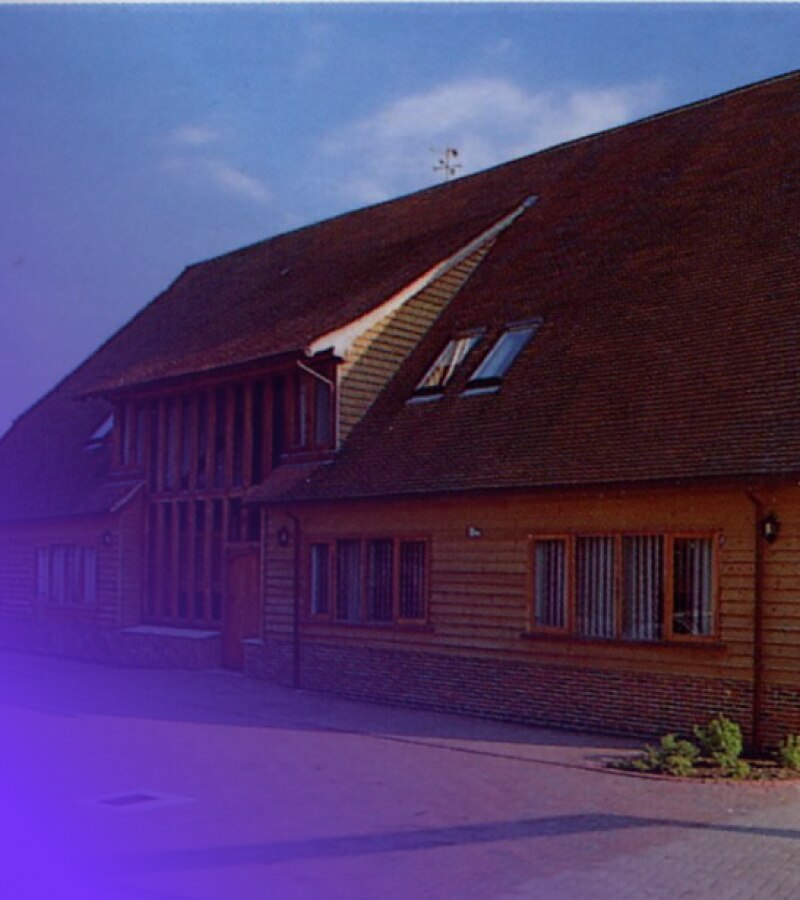
We loved celebrating this milestone at our Cambridge office, alongside the micro:bit champions and partners who've helped make it




Moving a cloud-native app from x64 to Arm takes less than you might think. 👀
Multi-architecture containers make it possible to build for and deploy on Arm-based Microsoft @Azure Cobalt 200 with minimal changes.
Watch the demo to learn how!
https://okt.to/iLB29e

One compute platform. From the device in your hands to the cloud behind it. @ctbergey explores how Arm is enabling the future of hybrid intelligence. 👇

From cloud to PC: Arm is powering the next era of intelligent computing
We’re entering an exciting new chapter for Arm, not just in personal computing, but across the computing landscape...
okt.to
The next chapter of hybrid intelligence is taking shape on Arm.
Microsoft's new Surface PC featuring @NVIDIARTXSpark brings that vision one step closer, building on the same Arm compute platform that powers Azure Cobalt in the cloud.
It marks a new milestone for our
More power. More possibilities. More places to make it happen.
Meet the most advanced Windows laptops ever, powered by @NVIDIARTXSpark.
Available for pre-order now. https://msft.it/6018aol50
Video Credit: @BBC Tech Now
Technology restoring touch for amputees and those born without a limb today — and advancing what’s possible in robotics. 🦾
@paulcarterTV, @DOUBLExA and Arm’s @drewhenry explored the @PSYONICinc Ability Hand at our Cambridge office – and the